Showing posts with label Birding. Show all posts

Monday, 28 November 2016

PokemanGo - the birder's way of the game...

It was about six months ago that we were sitting spending some family time with my wife and my two kids. Suddenly my son - half immersed in his mobile went out of the room only to return after fifteen odd minutes. His return was with a smile on his face and mobile in his hand. He spoke to his sister in hushed but excited tones. She too showed signs of great excitement and my casual enquiry to it was dismissed by both of them simultaneously replying - brother-sister talk - out of your syllabi. My raised eyebrows were not even acknowledged by either and I thought it was the end of the matter.
My target bird vs PokemonGo dragons...

My children's target Pokemon
A few days later one night after dinner once again as we were sitting chatting - my brother and his kids too in our house. Once again I saw the same hushed talk and excited look in all of the kids eyes. Suddenly my daughter asked for my car keys. Well she is an adult so as to say and owns a drivers licence so I just handed over the keys with a question - where too ? It's almost midnight - once again a simultaneous reply was - we will be back soon by all four kids. To hell with it I thought and let it slip. They returned after about an hour and were jumping up and down as if they have achieved something of great significance - my reaction was that of a father and an uncle - guys you are grounded if I do not understand why and where you went now. They did not skip a heartbeat and all were jumping around me and shouting all at the same time. They have captured 'Charizard' - and as expected I had no idea what they are talking about. After the party ended - before dropping down dead in bed I did some research. Well PokemanGo was a virtual reality game where in characters appear on random places overlaid on google like maps and you have to go and capture the virtual characters. 

Bloody - like hell I realised I have done that my entire life... scanning bird reports, web logs to see what bird has been sighted where and then rush to take snaps and log the sightings. Well there was a basic difference between my child and myself in the same game we were playing with different names. I hit bed early - rise early and am in the womb of nature savouring the fresh air, appreciating nature and God's creation. That led me to be more responsible towards mother nature and sometimes am ashamed when I am given more than one napkin in a restaurant that I have to throw in the dustbin without using, or forgetting to tell the retail that I do not want a copy of the credit card slip - lest I throw it in the dustbin without even glancing at it. Birding has taught me to respect nature, be careful in wasting resources - be it paper, gas, or anything else. I do not litter the country side and carry my own waste bag to dispose off the garbage I create while out of house. Then ofcourse - there is this one little thing more about the difference between my kids game and mine - I have struck with it for better of 25 odd years nurturing it - my kids have already moved on after playing this game for a month.

I am sure that there will be things we can do to coax our kids towards nature and respecting nature. I wonder what will happen to this world with kids who have no exposure to nature and are living lives with no connect with their surroundings. After all it will will be they who inherit this planet and take decisions to protect it for their siblings and generations to come. I wonder if we are doing all we can to pass on the batton to our kids and telling them that winnings are not in a virtual world with PokemanGo but the very world we live and inherit.

And here's the game I played...

Slept at 9 pm sharp. Got up at 3 am, brushed my teeth, took a shower had a cup of tea and hit the road.


Sighted this wonderful sight with a breath of fresh air and blessings of orange lit morning sky...

you can run - but cannot hide - Lesser Yellownape

Would not have let this fiery dragon of the pokemon go scot free...
White-capped Redstart
Greeted the Grey-capped Pygmy Woodpecker that started to peck for the Breakfast

Heard the Rusty-cheeked Scimitar Babbler calling a hundred yards away - tracked it down and bagged it...
Caught a Common Tailorbird that was calling another kilometre away...
...another two km down the road captured these Chestnut-eared Buntings resting and sitting hidden beneath a bush...
...captured this pokemon dragon that had kept an eye on my movements from the top of the hill another 5 km ahead...
Asian-Barred Owlet
Caught another pokemon flirting with me - coming in sight and out another few km down the road...
Finally reached home from in the evening from a very satisfying game - took a bath and sipped on my favourite Single malt,,, satisfied and tired like hell...

Monday, 16 May 2016

Brown, tiny and a pain to find: Eurasian Wren

Wrens are small, and inconspicuous except for their loud songs. There are a total of 80 species worldwide and out of that only one, that is Eurasian Wren that is "old world’ and occurs in India, The range extending basically along Himalayas from Iran, Afghanistan across till Japan.  These birds have short wings and thin down-turned bills. Several species out of these hold their tail upright. All are insectivorous.

The small little Eurasian Wren in its typical Himalayan Habitat
Small tail, down curved bill...


This bird is almost as familiar in Europe as the robin. It is mouse like and the best tell tale of this bird is the song.
Great lighting, good pose, wonderful patience, it finally stood there - in a studio settings to give me a awesome shot...
Highly polygynous and it is believed to be unusual mating habit for passerines. The Eurasian Wren at 9 cm is tiny - and funny to watch as it has a small tail. We were birding in Sikkim and it was just short of Zuluk (above 10,000 feet) when we came across this single wren. The bird got discovered due to its call and after we stopped, it did take us some time to spot it. Once spotted however - it was a paparazzi friendly bird. It posed to our complete satisfaction - taking us even to the small cave that it must have been residing. 

It moved in and out of the nooks and corners with the ease of a mouse...
This brings us to the interesting fact about this bird - the scientific name is Troglodytes Troglodytes - that name is taken from Greek word ‘Troglodytes’ - that means ‘Cave-dweller’. We saw this disappear into the cracks and caves in the stone pavement and we did take time looking at this beautiful bird for almost half an hour before moving on to other birds...

Wednesday, 13 April 2016

Destined to die... Red Avadavat (Lal Munia)

Humans are funny creatures, we want to be Gods and Slaves all at the same very time. God because we have found ways and means to challenge the nature and Oh, havoc we have wreaked, we have built great Cities, Dams, travelled to moon and back and looking at ways to visit the stars… all this is okay but in the very deep we are afraid and look for ways and means to brush aside the unknown and are ever looking for reasons and looking for others to be the fall guy for our doings.

Today I deal with this quality leading to devastation of a species - but then we just brush it aside without a second thought… I refer this unfortunate species as Canary birds of India.

Some dose of history has to be passed with this to understand what do you mean when you say the Canary… Its a cliché really… a common place remark that is made without knowing. It so happened that there were miners dying in the Coal mines mysteriously. The tissue of the dead were stained red. Meanwhile a Mr John Haldane was experimenting with deadly gases using himself as a subject of these tests. He used to lock himself up in rooms with high levels of carbon dioxide and monoxide to ‘know firsthand’ the effects of being slowly poisoned. He discovered that the carbon monoxide, that is a by-product of combustion is combining with haemoglobin in the blood and the combination stained the tissue bright red. He put two and two together and came to the conclusion that it is the air poisoning in the mines that was killing miners. He proposed that Canaries be carried in the coal mines to detect this poisoning. Why canaries ? I do not know but they were pets, small, birds and expendable? The birds tissues absorb oxygen while it inhales and while it exhales, so in theory the birds would get effected twice as fast by air poisoning and if the canaries starting to die - it was time that either the men run out or follow suite. (Continue reading after these pictures...)
Pictures of birds clicked in Hyderabad
Red Avadavat in all its glory...

Their favourite spot - on Sarkanda - the elephant grass
Hey you !!

In India I really do not know the history this well but the story was - keep Lal Munia (Red-avadavat) in your homes, if there is ill omen on its way to affect you - the birds will die. Oh and there is no proof of that at all is another story - but this did catch on. The Red Avadavats were kept as pets in thousands. These were poor pets, in the sense that they would not last for long in captivity, this made the story more real and owners used to replace them by those caught in the wild. This along with the massive loss of habitat dwindled the numbers of the birds in the wild. They are banned as pets and believe you me - it did give this bird some respite. That respite would still not have a meaning if you as and individual is ready to look the other way - the day you see this bird being traded.


A pair in Mohali... 
Presenting the beautiful Red Avadavat, the Lal (red) Munia or the Strawberry Finch - the little red bird of Estrildidae family. Surprisingly the species name amandava and the common name avadavat are derived from the city of Ahmedabad in Gujrat, India, from where these birds were exported as pets in the former times. The males are bright red in the breeding season. One fun fact about these birds are the the beak turns red in May, darkens in November and December and turns black in April. This beak colouration is cyclic and linked to changes in Day-length.

The beautiful...

Typical habitat of Lal Munia
We as humans need to realise that this is the wealth that we have to pass down to our generations - the real worth of living in this world...

Tuesday, 8 September 2015

Birding in Jagdalpur, Chhattisgarh: Aug - Sep 2015

Let’s kill the details of Jagdalpur first - well its a city in Bastar district of Indian state of Chhattisgarh. Jagdalpur is governed by Jagdalpur Municipal Corporation and is the administrative headquarters of Bastar District and Bastar Division. It was also the capital of the erstwhile princely state of Bastar. It has the fastest growing population of Chhattisgarh and in 2014 had a population of 2,39,525. Being a small town with three lakes and fair amount of open spaces, when I came to know that I have to spend some time there I was excited about the birds that I will get to see there.


The first thing that I did was to log on to my eBird account and try to explore whether any birding hotspot was logged by anyone in past at that location. I was disappointed. It was as if I was the first one to do birding there with no birds logged in Jagdalpur and adjoining areas. All the same I was not deterred and decided that I will make the lists and upload them.


Finally when I started to start birding, I don’t know whether I was happy or disappointed. There were no lifers that added to my list of birds, but then with patience and some luck I was able to spot a fair varieties of birds with the lists spanning half a dozen birding sessions. (The lists as submitted to eBird are at the end of the blog post). The lists are not all of the birding that I have done at this place.

As I reached the city and moved towards my hotel (only one worth calling a hotel, pure veg and liquor free) I noticed that the city was generally dirty (no offense but 'Swach Bharat' called by Mr Modi has a long long way to go) and the house sparrows were really plentiful. Infact the birds that I saw here that day were the House sparrows, Asian Pied Startling and crows. Dirty or no I had to do what I had decided to do - Birding !!.

There are two places that I did birding primarily in Jagdalpur, the airport and the Dalpat Sagar. The entry to Airport is restrictive so I cannot speak for anyone else trying to do birding here. Dalpat Sagar is one of the three lakes in the city. There were more lakes but are now dry. Infact at Dalpat Sagar also show signs of  coming under pressure from two of the four sides by the expanding city.
Jagdalpur
Google Snapshot of the Jagdalpur town.

One of the most interesting birding spot that I have found anywhere in India so far has been the airports. They are restricted and there are pockets around it that are not touched and are full of bird life - especially the small ones. Unfortunately the larger birds are not tolerated in and around the airports and I will not dwell as to how they are treated, but will restrict to birding. The other great thing about this airfield of Jagdalpur was that there is very little fixed wing traffic, if at all. The rotary wing traffic does not mean requirement to eradicate birds, even though there have been bird hits, but fortunately they have not been serious.


So during the periods of no flying days or less flying times I took the opportunity and carried out birding within the premises. At the entry near the dispersal there is a clump of bottle brush trees and have all sorts of interesting birds coming there. One of the first ones that I saw there were the leaf birds, later identified as Jordan’s leaf bird and small minivets. Ofcourse there are a ton of Red-vented bulbuls, Oriental magpies (Nesting in the bottle brush tree), doves (Laughing dove, Eurasian collared and spotted doves) and Scaly-breasted Munia. Black drongo were also very common.

On around the runway Zitting Cisticola  was common along with Prinias, Asian pied starlings and one siting of three Little Ringed Plovers. That was probably due to the recent rains and water logging at one end of runway. There were also siting of a pair of Indian Nightjar on the western edge of the runway.
Jagdalpur airport
Google Snapshot of the airfield

Other than this Baya weavers were a plenty along with a couple of pairs of Asian Koel and Spotted Owlets. Every evening there used to be Asian Openbills and Night Herons flying overhead going either North or towards South. I really did not understand what could be so important that the same bird (aka Asian Openbill) one used to go one way to roost and the other one go opposite to it. That mystery did not really get solved till end.


Next was the birding along and around the Dalpat Sagar Lake. The lake has a periphery of almost 3 km and it had one clump of trees in the middle (as also seen on google snapshot posted below) so we did expect good birding there. We were not disappointed. as we went to the lake park on the eastern edge we sawa a huge colony of Black-crowned Night Herons, Little Egrets and Little Cormorants. The trees were huge and thick and that made the exact count very difficult but could be in a few hundreds. Here at the entrance we also saw a lot of Bronze-winged Jacanas and Common Moorhen.
Dalpat Sagar
Dalpat Sagar with the trees in the center visible

From there we started a walk on the northern side with the bund. There were open fields on the northern side and baring a few vehicles it was fairly peaceful. It is then we heard Baya weavers and every few trees we passed we could see activity males getting nesting material and not stopping for us in any case. Here a bird did a short hop flight and tried to blend in the reeds. Though it was not a Lifer but always a pleasure to see that sulking Yellow Bittern. A few steps forward Black Bittern (reported as rarity) by eBird hopped, flew a few meters and disappeared in reed. I would have loved a snap but it refused to oblige. Also here I chanced to look up and saw a few trees in the middle of the lake with a lots of movement. Peering through the camera made my heart skip a beat, there they were - hundreds of Asian Openbills. This took my score to two great breeding colonies of Asian Openbills. The first one that has been recorded in Danapur (http://cheemablog.blogspot.in/2015/01/birding-in-patna-and-around-jan-15.html) I have blogged earlier about it where almost 10% of the breeding Asian Openbill congregate to breed there. The amount of birds recorded there are almost anywhere from 8000 to 12000. So seeing here does not make it as big but an important breeding ground non-though-less. We spent time there to observe this beautiful sight and then moved on after about an hour or so. Another observation I had there was that the birds were breaking top branches of nearby Eucalyptus. These trees are introduced trees in India but that did not prevent them being used for nesting material by the Openbills. The next birds that I saw and loved them were the Streaked Weavers. I got some good shots of the females waiting nearby to inspect the nests being constructed by the males. It was already two and a half hours that we had been walking and birding so decided to call it a day and headed back. The list of birds are at the end of this blog entry. There are some birds that were observed and not included in the list submitted during these few days. The notable birds are Indian Golden Oriole, Common Kingfisher, three Bitterns namely Black Bittern, Cinnamon Bittern and Yellow Bittern

Well at the end of all this birding I missed seeing Common Hill Myna. Well I guess there will be some other time when I see them.

Jerdon's Leaf bird in the Bottle brush tree at the airport.
Black-crowned Night Heron one one of the tall trees (hence the odd angle of shot) on the Dalpat Lake entrance. Picture is highly cropped.
A Bronze-winged Jacana chick. On my two visits I found that one side of the lake Bronze-winged Jacanas and one side were the Pheasant-tailed Jacanas. Wonder why? Wonder why they were not overlapping territories. All the same the period of observation was too small to take it for truth perhaps.

Ashy Prinia were virtually omnipresent at the lake area and males calling out from the perches here, there and everywhere.

This Brahminy Starling gave us a shot just as it would have perhaps sat and posed in a studio.
One of the trees Asian Openbill breeding colony was found. The other tree is out of the frame and on to the left. Counted 100+ birds.

Baya weavers were busy constructing nests and wooing females to come and inspect them. This male went a step ahead and was ready to make and offering for home coming - oh what a sight it was.

Highly cropped record shot of Ashy Woodswallow.

Set of two shots showing Asian Openbill using Eucalyptus as nesting material.

It was fun watching Openbills coming one at a time and breaking the top twigs of a 100 feet Eucalyptus tree and flying away for nesting.
Streaked Weaver female at the lake. The males once again were busy weaving and females waiting nearby for inspecting the same.

Pheasant-tailed Jacana. On day one we spotted two pairs but the following day we found more than half a dozen pairs.

Grey-headed Swamphen (Earlier known as Purple Swamphen, Change of name in Aug 2015)
Indian Silverbill
Cinnamon Bittern. One of the three Bitterns seen at the lake. Three Cinnamon Bitterns, this picture is courtesy Capt Yella Rao. I was not carrying my camera.
The second Bittern of the three Bitterns spotted at the lake - Yellow Bittern. The third Bittern unfortunately could not be captured on the camera. Too shy, light too low and distance too great for my camera...

I have pasted my eBird list that I have uploaded over time regarding Jagdalpur sitings. There are a few birds missing due to software issue with eBird. I am getting that resolved.

Row #,Species,Count,Location,S/P,Date,LocID,SubID
1,Lesser Whistling-Duck,2,IN-Chhattisgarh-Jagdalpur-494001 - 19.0929x82.0201,IN-CT,05 Sep 2015,L3887130,S24892768
2,Cotton Pygmy-Goose (Cotton Teal),,None,IN-CT,08 May 2015,L3623243,S23312832
3,Asian Openbill,,None,IN-CT,08 May 2015,L3623243,S23312832
4,Little Cormorant,,None,IN-CT,08 May 2015,L3623243,S23312832
5,Yellow Bittern,1,IN-Chhattisgarh-Jagdalpur-494001 - 19.0929x82.0201,IN-CT,05 Sep 2015,L3887130,S24892768
6,Black Bittern,1,IN-Chhattisgarh-Jagdalpur-494001 - 19.0929x82.0201,IN-CT,05 Sep 2015,L3887130,S24892768
7,Purple Heron,1,IN-Chhattisgarh-Jagdalpur-494001 - 19.0929x82.0201,IN-CT,05 Sep 2015,L3887130,S24892768
8,Little Egret,2,IN-Chhattisgarh-Jagdalpur-494001 - 19.0929x82.0201,IN-CT,05 Sep 2015,L3887130,S24892768
9,Eastern/Western Cattle Egret,3,Jagdalpur,IN-CT,17 Mar 2015,L3498004,S23642819
10,Indian Pond-Heron,1,Jagdalpur,IN-CT,17 Mar 2015,L3498004,S23642819
11,Black-crowned Night-Heron,3,IN-Chhattisgarh-Jagdalpur-494001 - 19.0929x82.0201,IN-CT,05 Sep 2015,L3887130,S24892768
12,Black-shouldered Kite (Black-winged Kite),,None,IN-CT,08 May 2015,L3623243,S23312832
13,Black Kite,,None,IN-CT,08 May 2015,L3623243,S23312832
14,Grey-headed Swamphen (Purple Swamphen),1,IN-Chhattisgarh-Jagdalpur-494001 - 19.0929x82.0201,IN-CT,05 Sep 2015,L3887130,S24892768
15,Eurasian Moorhen,3,IN-Chhattisgarh-Jagdalpur-494001 - 19.0929x82.0201,IN-CT,05 Sep 2015,L3887130,S24892768
16,Red-wattled Lapwing,,None,IN-CT,08 May 2015,L3623243,S23312832
17,Pheasant-tailed Jacana,1,IN-Chhattisgarh-Jagdalpur-494001 - 19.0929x82.0201,IN-CT,05 Sep 2015,L3887130,S24892768
18,Bronze-winged Jacana,,None,IN-CT,08 May 2015,L3623243,S23312832
19,Rock Pigeon (Blue Rock Pigeon),1,Jagdalpur,IN-CT,17 Mar 2015,L3498004,S23642819
20,Eurasian Collared-Dove,,None,IN-CT,08 May 2015,L3623243,S23312832
21,Spotted Dove,,IN-Chhattisgarh-Jagdalpur-494001 - 19.0777x82.0436,IN-CT,28 Aug 2015,L3873255,S24784191
22,Laughing Dove (Little Brown Dove),,None,IN-CT,31 Mar 2015,L3529196,S22797382
23,Asian Koel,,IN-Chhattisgarh-Jagdalpur-494001 - 19.0777x82.0436,IN-CT,28 Aug 2015,L3873255,S24784191
24,Greater Coucal,,None,IN-CT,31 Mar 2015,L3529196,S22797382
25,Indian Nightjar,1,IN-Chhattisgarh-Jagdalpur-494001 - 19.0929x82.0201,IN-CT,05 Sep 2015,L3887130,S24892768
26,Common Kingfisher (Small Blue Kingfisher),1,IN-Chhattisgarh-Jagdalpur-494001 - 19.0929x82.0201,IN-CT,05 Sep 2015,L3887130,S24892768
27,White-throated Kingfisher,1,IN-Chhattisgarh-Jagdalpur-494001 - 19.0929x82.0201,IN-CT,05 Sep 2015,L3887130,S24892768
28,Green Bee-eater,1,Jagdalpur,IN-CT,17 Mar 2015,L3498004,S23642819
29,Indian Roller,,None,IN-CT,08 May 2015,L3623243,S23312832
30,Coppersmith Barbet,1,Jagdalpur,IN-CT,17 Mar 2015,L3498004,S23642819
31,Ashy Woodswallow,6,IN-Chhattisgarh-Jagdalpur-494001 - 19.0929x82.0201,IN-CT,05 Sep 2015,L3887130,S24892768
32,Common Iora,2,IN-Chhattisgarh-Jagdalpur-494001 - 19.0929x82.0201,IN-CT,05 Sep 2015,L3887130,S24892768
33,Long-tailed Shrike,1,IN-Chhattisgarh-Jagdalpur-494001 - 19.0929x82.0201,IN-CT,05 Sep 2015,L3887130,S24892768
34,Black Drongo,6,Jagdalpur,IN-CT,17 Mar 2015,L3498004,S23642819
35,House Crow,,None,IN-CT,08 May 2015,L3623243,S23312832
36,Red-vented Bulbul,,None,IN-CT,31 Mar 2015,L3529196,S22797382
37,Zitting Cisticola,,IN-Chhattisgarh-Jagdalpur-494001 - 19.0777x82.0436,IN-CT,28 Aug 2015,L3873255,S24784191
38,Common Tailorbird,,IN-Chhattisgarh-Jagdalpur-494001 - 19.0777x82.0436,IN-CT,28 Aug 2015,L3873255,S24784191
39,Ashy Prinia,1,IN-Chhattisgarh-Jagdalpur-494001 - 19.0929x82.0201,IN-CT,05 Sep 2015,L3887130,S24892768
40,Plain Prinia,,IN-Chhattisgarh-Jagdalpur-494001 - 19.0777x82.0436,IN-CT,28 Aug 2015,L3873255,S24784191
41,Yellow-eyed Babbler,1,Jagdalpur,IN-CT,17 Mar 2015,L3498004,S23642819
42,Jungle Babbler,,None,IN-CT,08 May 2015,L3623243,S23312832
43,Oriental Magpie-Robin,,None,IN-CT,31 Mar 2015,L3529196,S22797382
44,Rosy Starling,3,Jagdalpur,IN-CT,18 Mar 2015,L3498004,S22797405
45,Asian Pied Starling (Pied Myna),1,Jagdalpur,IN-CT,17 Mar 2015,L3498004,S23642819
46,Brahminy Starling,1,IN-Chhattisgarh-Jagdalpur-494001 - 19.0929x82.0201,IN-CT,05 Sep 2015,L3887130,S24892768
47,Common Myna,,None,IN-CT,08 May 2015,L3623243,S23312832
48,Purple Sunbird,,None,IN-CT,31 Mar 2015,L3529196,S22797382
49,White-browed Wagtail (Large Pied Wagtail),1,None,IN-CT,08 May 2015,L3623243,S23312832
50,Paddyfield Pipit,,IN-Chhattisgarh-Jagdalpur-494001 - 19.0777x82.0436,IN-CT,28 Aug 2015,L3873255,S24784191
51,House Sparrow,1,Jagdalpur,IN-CT,17 Mar 2015,L3498004,S23642819
52,Streaked Weaver,10,IN-Chhattisgarh-Jagdalpur-494001 - 19.0929x82.0201,IN-CT,05 Sep 2015,L3887130,S24892768
53,Baya Weaver,,IN-Chhattisgarh-Jagdalpur-494001 - 19.0777x82.0436,IN-CT,28 Aug 2015,L3873255,S24784191
54,Indian Silverbill (White-throated Munia),2,IN-Chhattisgarh-Jagdalpur-494001 - 19.0929x82.0201,IN-CT,05 Sep 2015,L3887130,S24892768
55,Scaly-breasted Munia (Spotted Munia),,IN-Chhattisgarh-Jagdalpur-494001 - 19.0777x82.0436,IN-CT,28 Aug 2015,L3873255,S24784191

Clamorous Reed Warbler. Another last moment addition as the bird was not identified till after I had posted the blog. Photo Courtesy Capt Yella Rao


Friday, 21 August 2015

Birding in Hyderabad: Jul-Aug 2015

It was a Monday morning when I came to know that I might have to go to Hyderabad for work and stay there for a month or so. Being a north Indian - I always look forward to birding in the South and I started working at the earnest making a list of the birds that I desired to see. Ofcourse all the birds were not on the lifer list - but then there are some birds that one would not mind any day at all. That apart there was one bird that had eluded me in the past and that was the ‘Blue-faced Malkoha’. I was hell bent that this should be part of my 'would be' bird. After these thoughts and going over the two three books that I refer for birding I was sure that I was going to have one hell of a time.
Preparing to go to a new city and birding also has some disadvantages...
Firstly, you are not aware of the hotspots that span so many seasons - you just have to be at the right place at the right time to make sure that you have good sightings. This one point does get mitigated to a point by the fact that if you do put in some hard work about the sightings on various groups and social media you will get a fair idea - as to what to expect and when and where to expect. eBird is another place that gives wonderful data about hotspots etc. The problem is that as of now the users are not the kind that can generate detailed analysis to rely on alone for birding.
Secondly, mobility is a big issue. I mean its damn bloody difficult to reason out and explain with a cab that you have to drive to so and so place, keep the pace right and when I Shout - “Bird” he has to look out for traffic and park in a manner that I can observe the bird from the vehicle or get down if the bird is of the kind that will allow me to sneak up to it without flying away. Then there are points that a birder only knows - like never drive straight towards the bird, approach it at an angle and look out for the comfort level - I mean if the birds shows signs that you are moving into its ‘personal’ zone - stop, see and decide. It is not only that - the end line is that even my past experience with cabs
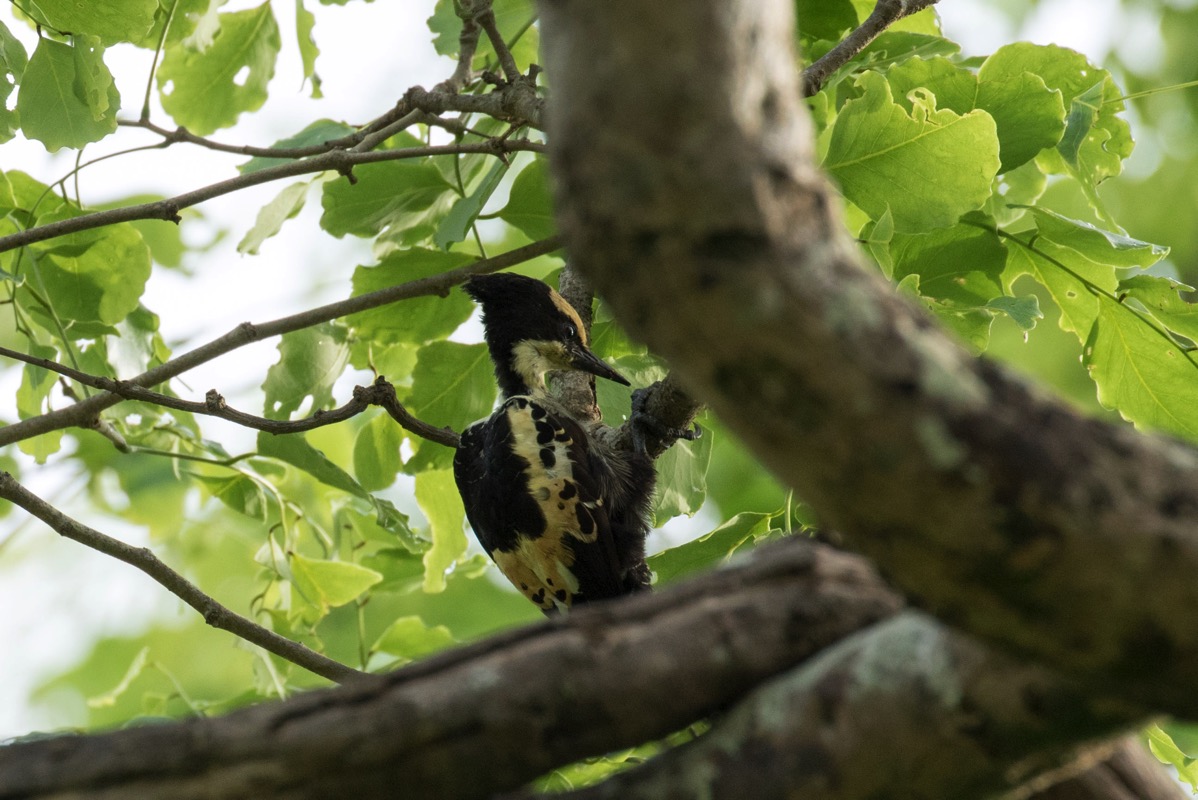
6X5A0691 100
Heart-spotted Woodpecker. This picture was clicked in Sanjay Gandhi National Park, on out way to Kanheri Caves. If you look at the spots you will find them heart shaped. A lifer for me and a great find as I was told not many people have reported seeing them in this park.

is that they make horrible people to go out birding with. Basically the finesse of appreciating and finding birds is lost on them.
I started knowing these disadvantages and started working on to neutralising them. Study and preparation I did meticulously, even to the extend that I started flipping the ‘Birds of Indian Subcontinent’ book and the app on my iPhone, iPad looking for the ranges of birds covering areas around Hyderabad. The list was not really physical - it was more of a brain exercise. Then  I ploughed through sites like Facebook and Indian Nature Watch looking for regulars who posted pictures of birds of Hyderabad online. Next I started searching for groups and clubs for Birding. The data once again was immense. Hyderabad is one of the places where you will find tons of birders. I also asked my friends from Chandigarh bird club if they could point out someone in Hyderabad who could perhaps take me birding there. Well like there have to be million foot-falls in malls to sell a packet of chips - I too know that a vast majority of birders are accepted with jobs and it is extremely difficult to ‘take’ someone out for birding - especially with not previous connect. All I could promise really was a reciprocation if some one came to Chandigarh and wanted to do birding.
It so happened that I was routed through Mumbai and I got a day off there. This meant that I would be able to explore ‘Sanjay Gandhi National park’. I promptly rang up one of my classmates there and asked him to be there for birding. It was a week day but lucky for me he said he will manage. I also came to know that the park opens at 5:30 in the morning. Well I was there at the park gates at 5:20 with camera dangling on my harness read to shoot. The moment I enquired  where I can buy tickets I was told that in the morning only joggers with bonafide passes can enter, visitors have to wait till 7:30. I stood there waiting for my friend also to fetch up at 7:00 AM. he was there dot on time and then we both waited for the gates to open. The gates did open dot at 7:30 and we were one of the first ones to buy a ticket. The weather was overcast and a not so good photography day. All the same I saw a shadow of three birds fly past and settle on a tree a couple of yards away. peered through the binoculars and did not see to much in the thick green cover of the tree. All of a sudden before we moved on the bird decided to hop on to a tree with little less cover. My heart knew no joy, three ‘Heart-spotted woodpeckers’ I got on to clicking a few dozen frames. As expected there were no great keepers but did get good record shots (Pic No 1). We there after moved on till the Kanheri caves stopping on and off looking out for birds, the weather turned even worse with off and on drizzle. The green cover was also too thick. We could hear a lot of birds but hardly any sightings. Next I had a desire to enter one of the core areas, the target species being ‘Oriental Dwarf Kingfisher. We were politely turned back at one a the gates telling that we need permission from none other than the IFS. Off we went to the office and were told that the director arrives at 1030… and the wait again started. The wait was worth it for reason other than birding. I met Mr Vikas Gupta (IFS), Chief Conservator of Forests and Director of Sanjay Gandhi National Park. The fine gentleman he was and perhaps for the first time I met a person holding such a responsible position and rank share his passion for the National Park. When I introduced myself as a retired army officer now birding and deeply into wildlife, it ensured a healthy discussion with Mr Vikas giving his insights how he intends to shape the national park over a period of time to ensure that people do not enter it with a preconceived idea of seeing a leopard - but for enjoying the Real forest as against the concrete one they are so used to seeing and feeling all their lives. I wish and pray that there a million persons like him looking after our forests, wildlife and natural resources. The permission was granted and the walk was nothing but marvellous. too many birds could not be sighted due to extremely thick foliage but like I said the experience itself was so rewarding.
On 10th I reached Hyderabad and sent out messages to whoever would care to listen…. Take me out please. The call was answered by Mr Sumeet Mukherjee to begin with. How I came in touch with his is another interesting story - some other time perhaps. He took me to Narsapur Reserve forest on 12 Jul. The experience was rewarding with 53 species logged in four odd hours with Jerdon’s Leafbird recorded as my lifer. Other than that the notable sightings were One Tickell’s Blue-flycatcher, 7 Yellow-eyed Babblers, 5 White-browed bulbuls, 2 Black-headed Cuckooshrikes, 1 Black-headed Ibis and two breeding pairs of Greater Painted-snipe. The list and the photographs are at the end of the blog.
Next break for birding was on 18 Jul at Bhadrachalam. The visit was cut short as the car that I took out for birding was suddenly recalled for some other errand. All the same the count was 20 species with no real Notable sightings other than seeing Lesser Whistling-ducks roosting on very tall date trees. I observed this for the first time. Once again the list is at the end of the writeup.
I had also posted a post on Hyderabad birds on Facebook requesting for a birder who could take me around. The call was answered by Dr Kamal Syed (Also a Nawab). I must introduce the gentleman also. He is not exactly a birder but a man with a heart for nature and all that is good around him. His company was pleasant and the time spent was great. He took me to Osman Lake near Gandipet on 30th Jul 15. This is one of the lakes built by Nizam to supply fresh water to Hyderabad. The state of the lake was bad, lack of monsoons in and around Hyderabad was evident. The lake had perhaps shrunk to one tenth of the erstwhile size, the catchment area around seems to have been up for grabs by farmlands and boards threatening of trespassing sprung around the lake. As far as the birding was concerned it was lesser number of species but more that can be listed as notable sightings. We sighted a total of 24 species. The lifer was Indian Courser. The notable were the numerous Indian Bushlarks, 22 Greater flamingos, 25 Eurasian Spoonbills (listed as rare in this area on eBird), 12 Yellow-wattled Lapwing, 7 Red collared Doves and 3 Pied-cuckoo. The list and the pictures are at the end to this writeup.
The last birding day, on 03 Aug at Hyderabad turned out to be an icing on the cake. My birding partner Capt Yella Rao was on leave in Hyderabad and he organised an otherwise impossible. Birding in ICRISAT Campus. The campus is around 1450 hectares with different vegetation and a few lakes. The campus is under UN so as to how he managed to get passes was nothing short of a miracle. We spent around three and a half hours, logged 45 species with a wonderful sighting of breeding colony of Great Cormorant (counted 39), 50 plus spot-billed ducks, Spot-billed Pelican, Oriental Darter, 8 Painted Francolins and all three varieties of Ibis found in india. 50 plus Baya weavers and Large-grey Babblers.
That wrapped up my Hyderabad visit with hopes of many more to come. I had been targeting some specific birds but unfortunately I could not find them. Those birds, though common and I was assured by whosoever I went birding with that they will definitely show me - did their trick and thus went with my wanted list yet to be ticked. The birds were Blue-faced Malkoha, King Quail and Painted Spurfowl. Well but then I did log some Lifers also so ideally I should be happy and looking forward to the next hunt at Hyderabad.
I would wrap up this blog entry (that has already been long overdue) by a quote I read today by Ashish Ram (The power of One)
One Song can Spark a Moment, One Whisper can Wake a Dream,
One Tree can Start a Forest, One Bird can Herald the Spring….
Do raise your voice for crime against Environment, Do do your bit for the Birds.

I got this great flock of bird at the Osman Sagar. Spot-billed Pelicans, Asian Openbill, Painted Storks, Spot-billed ducks and a lone Red-wattled Lapwing. Hmmm... have I missed anything ??
Red Collared Dove. It is a widespread resident of Indian plains, also called as Red Turtle Dove.

One more picture of a Red-collared Dove - but this time clicked in Osman Lake area.

At Narsapur forest I saw this huge flocks of Asian Openbills. What was more satisfying was seeing almost 60% Juveniles. They were fairly shy and flew off to the opposite bank of the lake as we approached the lake.

This one picture I wanted to include as a trick picture where you should spot the bird. I too saw it by chance only. Presenting the well camouflaged - Greater Painted-snipe.

They were snoozing at a pond and were in great numbers, counted 12 on a single place. Grey Herons

This picture was clicked in the Narsapur forest. Both Sumeet and self when we saw this bird had hopes that it will turn out to be some lifer for us. The bird was very frisky and hardly giving us a chance to study it in detail. It is only when we studied the pictures in the computers that we both realised that we had been looking at Pied Bushchat Juvenile.

One of the beautiful lifer of my visit to Osman Sagar Lake with Dr Kamal Syed. The Indian Courser. Also the birds gave us all the time to photograph them. A memorable lifer moment...
One of the two almost similar looking Sparrow Larks, the Ashy-crowned Sparrow Lark is more wide spread in the continent. The Black-crowned Sparrow Lark is found in Western India only in Rajasthan and around only
The common Indian Bushlark, once again clicked in Osman Sagar Lake area.

The first time I saw Lesser Whistling-ducks sitting on such tall trees. These were not the only one however - there were virtually dozens of them on trees all around.

There was this craze pair of Golden Orioles jumping from one branch to another alternatively chasing each other. This picture was clicked on the day I had to abort birding while birding in Bhadrachalam (Telangana)

Always a ready poser this bird is. Common, beautiful, shy and bold all at the same time. As we turned back and started packing up we saw this group chirping around us. This particular bird gave some very good photo opportunity. Only the sun was glaring and shadows were just to strong to do justice to this beauty. Scaly-breasted Munia

Another lifer that I clicked in Narsapur forest. There was this pair of Jerdon's Leafbird that was fighting and warding off a Black-headed cuckooshrike. This picture was not really easy - with the birds perching and hopping every second. The sun too was strong - you can call this a lucky shot where the bird perched out of the thick bush and photoshop balanced the very heavy shadows.
This is the female of a beautiful bird - the small minivet. Seeing this female it would be difficult to guess the bright orange of the male but the male was just not ready to give a picture. Presenting here the Small Minivet

A partial picture that I used to count the no of Spot-billed ducks at Osman lake

When I got down to counting and recording the Eurasian Spoonbills, eBird reported these birds as 'rare'. I do not believe it as a lot of photographs of spoonbills come from Hyderabad area. All the same - presenting here the Eurasian Spoonbill flock. Ah - and yes there is a lone, tall and beautiful Greater Flamingo in the flock.
As I had written above the picture is of a male and a Juvenile Indian Courser. I did have a field day clicking these birds.

A opportunity snap of a Juvenile Yellow-wattled Lapwing.

I did click a lot of pictures of this beautiful bird (erstwhile State bird of Punjab) the Common Hooppoe. I am including this picture because this shows one of its very common acts. After it picks up an insect from the ground it tosses it in the air and gulps it down.
Ahhh our very own beauty - the Indian Peafowl - also our national bird. The beauty and grace of this bird in full plumage is what dreams are made of... I must add a note here - there is another variety of peafowl that India had - 'Green Peafowl' It has not been sighted for a long time and thought to be extinct.

This picture tells you why you should not drive offroad in open spaces and stick to the tracks as most of the times the birds that breed and groom chicks on the ground have chicks that can hardly be noticed and very easy to run or step over. More so their instinct is to lie low when threatened and you are likely to be completely oblivious of the fact that you have killed a budding bird. Do not off road during birding - especially during the season when breeding season is on.

Photographed all over the country practically but still does not stop to amaze. Richard Grimmett's book on Birds of Indian Subcontinent does not include Hyderabad in the range as published in the book but was there everywhere... Scaly-breasted Munia
The most beautiful of the three ibis we have in our country. The Black-headed Ibis in flight.

Purple Heron is a shy bird and not very easy to find. There have been times that I have been looking around for birds and this bird takes off a few feet from me. This particular picture was clicked in ICRISAT (International Crops Research Institute for the Semi-Arid Tropics) a UN research body.

Indian Roller. The revered bird of the country. There are two rollers seen in India - this one pictured here - the Indian Roller and the migratory that visits India in winters - the European Roller

Baya weaver bird males are the hard working one - they build the nests. The girls (as pictured here) see the activity from a distance and then come in to inspect. There is a flurry of activity as the males 'sell' their homes to the home makers. If the nest is rejected - it is torn down and the male goes on to build it all over again.

Common Hawk Cuckoo or the brain fever bird. There are a total of 14 types of cuckoo found in the sub continent. This being by far the most common one.

The Great Indian Cormorant in breeding plumage. What a fine sight it was to see them at their nesting sight. It is the most majestic of all three Cormorants found in India.


Row #,Species,Count,Location,S/P,Date,LocID,SubID
1,Lesser Whistling-Duck,2,Narsapur Reserve Forest,IN-TS,12 Jul 2015,L3202452,S24232968  
2,Cotton Pygmy-Goose (Cotton Teal),11,Narsapur Reserve Forest,IN-TS,12 Jul 2015,L3202452,S24232968  
3,Indian Spot-billed Duck,14,Narsapur Reserve Forest,IN-TS,12 Jul 2015,L3202452,S24232968  
4,Grey Francolin,2,Narsapur Reserve Forest,IN-TS,12 Jul 2015,L3202452,S24232968  
5,Little Grebe,4,Narsapur Reserve Forest,IN-TS,12 Jul 2015,L3202452,S24232968  
6,Asian Openbill,12,Narsapur Reserve Forest,IN-TS,12 Jul 2015,L3202452,S24232968  
7,Painted Stork,1,Narsapur Reserve Forest,IN-TS,12 Jul 2015,L3202452,S24232968  
8,Great Cormorant,2,Narsapur Reserve Forest,IN-TS,12 Jul 2015,L3202452,S24232968  
9,Little Cormorant,4,Narsapur Reserve Forest,IN-TS,12 Jul 2015,L3202452,S24232968  
10,Grey Heron,6,Narsapur Reserve Forest,IN-TS,12 Jul 2015,L3202452,S24232968  
11,Purple Heron,1,Narsapur Reserve Forest,IN-TS,12 Jul 2015,L3202452,S24232968
12,Great Egret,5,Narsapur Reserve Forest,IN-TS,12 Jul 2015,L3202452,S24232968  
13,Indian Pond-Heron,1,Narsapur Reserve Forest,IN-TS,12 Jul 2015,L3202452,S24232968  
14,Black-headed Ibis,1,Narsapur Reserve Forest,IN-TS,12 Jul 2015,L3202452,S24232968  
15,Shikra,1,Narsapur Reserve Forest,IN-TS,12 Jul 2015,L3202452,S24232968  
16,Brahminy Kite,1,Narsapur Reserve Forest,IN-TS,12 Jul 2015,L3202452,S24232968  
17,Black-winged Stilt,2,Narsapur Reserve Forest,IN-TS,12 Jul 2015,L3202452,S24232968
18,Red-wattled Lapwing,3,Narsapur Reserve Forest,IN-TS,12 Jul 2015,L3202452,S24232968
19,Greater Painted-Snipe,2,Narsapur Reserve Forest,IN-TS,12 Jul 2015,L3202452,S24232968  
20,Pheasant-tailed Jacana,3,Narsapur Reserve Forest,IN-TS,12 Jul 2015,L3202452,S24232968  
21,Bronze-winged Jacana,6,Narsapur Reserve Forest,IN-TS,12 Jul 2015,L3202452,S24232968  
22,River Tern,1,Narsapur Reserve Forest,IN-TS,12 Jul 2015,L3202452,S24232968
23,Red Collared-Dove (Red Turtle-Dove),3,Narsapur Reserve Forest,IN-TS,12 Jul 2015,L3202452,S24232968  
24,Spotted Dove,4,Narsapur Reserve Forest,IN-TS,12 Jul 2015,L3202452,S24232968  
25,Laughing Dove (Little Brown Dove),1,Narsapur Reserve Forest,IN-TS,12 Jul 2015,L3202452,S24232968
26,White-throated Kingfisher,1,Narsapur Reserve Forest,IN-TS,12 Jul 2015,L3202452,S24232968  
27,Pied Kingfisher,1,Narsapur Reserve Forest,IN-TS,12 Jul 2015,L3202452,S24232968  
28,Green Bee-eater,6,Narsapur Reserve Forest,IN-TS,12 Jul 2015,L3202452,S24232968  
29,Coppersmith Barbet,1,Narsapur Reserve Forest,IN-TS,12 Jul 2015,L3202452,S24232968  
30,Common Iora,3,Narsapur Reserve Forest,IN-TS,12 Jul 2015,L3202452,S24232968  
31,Small Minivet,2,Narsapur Reserve Forest,IN-TS,12 Jul 2015,L3202452,S24232968  
32,Black-headed Cuckooshrike,2,Narsapur Reserve Forest,IN-TS,12 Jul 2015,L3202452,S24232968  
33,Long-tailed Shrike,3,Narsapur Reserve Forest,IN-TS,12 Jul 2015,L3202452,S24232968  
34,Black Drongo,3,Narsapur Reserve Forest,IN-TS,12 Jul 2015,L3202452,S24232968  
35,Ashy-crowned Sparrow-Lark (Ashy-crowned Finch-Lark),1,Narsapur Reserve Forest,IN-TS,12 Jul 2015,L3202452,S24232968  
36,Barn Swallow,2,Narsapur Reserve Forest,IN-TS,12 Jul 2015,L3202452,S24232968  
37,Red-vented Bulbul,8,Narsapur Reserve Forest,IN-TS,12 Jul 2015,L3202452,S24232968  
38,White-browed Bulbul,5,Narsapur Reserve Forest,IN-TS,12 Jul 2015,L3202452,S24232968
39,Common Tailorbird,1,Narsapur Reserve Forest,IN-TS,12 Jul 2015,L3202452,S24232968  
40,Ashy Prinia,1,Narsapur Reserve Forest,IN-TS,12 Jul 2015,L3202452,S24232968  
41,Plain Prinia,1,Narsapur Reserve Forest,IN-TS,12 Jul 2015,L3202452,S24232968  
42,Yellow-eyed Babbler,7,Narsapur Reserve Forest,IN-TS,12 Jul 2015,L3202452,S24232968
43,Tawny-bellied Babbler,1,Narsapur Reserve Forest,IN-TS,12 Jul 2015,L3202452,S24232968  
44,Jungle Babbler,3,Narsapur Reserve Forest,IN-TS,12 Jul 2015,L3202452,S24232968  
45,Indian Robin,4,Narsapur Reserve Forest,IN-TS,12 Jul 2015,L3202452,S24232968  
46,Oriental Magpie-Robin,1,Narsapur Reserve Forest,IN-TS,12 Jul 2015,L3202452,S24232968  
47,Tickell's Blue-Flycatcher,1,Narsapur Reserve Forest,IN-TS,12 Jul 2015,L3202452,S24232968  
48,Pied Bushchat,1,Narsapur Reserve Forest,IN-TS,12 Jul 2015,L3202452,S24232968
49,Brahminy Starling,1,Narsapur Reserve Forest,IN-TS,12 Jul 2015,L3202452,S24232968  
50,Jerdon's Leafbird (Jerdon's Chloropsis),2,Narsapur Reserve Forest,IN-TS,12 Jul 2015,L3202452,S24232968
51,Purple-rumped Sunbird,3,Narsapur Reserve Forest,IN-TS,12 Jul 2015,L3202452,S24232968  
52,Paddyfield Pipit,2,Narsapur Reserve Forest,IN-TS,12 Jul 2015,L3202452,S24232968  
53,Baya Weaver,4,Narsapur Reserve Forest,IN-TS,12 Jul 2015,L3202452,S24232968
54,Indian Silverbill (White-throated Munia),4,Narsapur Reserve Forest,IN-TS,12 Jul 2015,L3202452,S24232968
55,Scaly-breasted Munia (Spotted Munia),3,Narsapur Reserve Forest,IN-TS,12 Jul 2015,L3202452,S24232968
56,Red-naped Ibis (Indian Black Ibis),1,IN-AP-Bhadrachalam-NH221 - 17.6482x80.9225,IN-TS,18 Jul 2015,L3797369,S24299301  
57,Black-shouldered Kite (Black-winged Kite),1,IN-AP-Bhadrachalam-NH221 - 17.6482x80.9225,IN-TS,18 Jul 2015,L3797369,S24299301
58,White-breasted Waterhen,1,IN-AP-Bhadrachalam-NH221 - 17.6482x80.9225,IN-TS,18 Jul 2015,L3797369,S24299301
59,Pied Cuckoo (Jacobin Cuckoo),1,IN-AP-Bhadrachalam-NH221 - 17.6482x80.9225,IN-TS,18 Jul 2015,L3797369,S24299301  
60,Greater Coucal,1,IN-AP-Bhadrachalam-NH221 - 17.6482x80.9225,IN-TS,18 Jul 2015,L3797369,S24299301
61,Rose-ringed Parakeet,15,IN-AP-Bhadrachalam-NH221 - 17.6482x80.9225,IN-TS,18 Jul 2015,L3797369,S24299301  
62,Indian Golden Oriole,4,IN-AP-Bhadrachalam-NH221 - 17.6482x80.9225,IN-TS,18 Jul 2015,L3797369,S24299301
63,House Crow,1,IN-AP-Bhadrachalam-NH221 - 17.6482x80.9225,IN-TS,18 Jul 2015,L3797369,S24299301  
64,Common Myna,1,IN-AP-Bhadrachalam-NH221 - 17.6482x80.9225,IN-TS,18 Jul 2015,L3797369,S24299301  
65,House Sparrow,1,IN-AP-Bhadrachalam-NH221 - 17.6482x80.9225,IN-TS,18 Jul 2015,L3797369,S24299301
66,Indian Peafowl,4,Osman Sagar Lake,IN-TS,30 Jul 2015,L3169524,S24430643  
67,Greater Flamingo,22,Osman Sagar Lake,IN-TS,30 Jul 2015,L3169524,S24430643  
68,Spot-billed Pelican,5,Osman Sagar Lake,IN-TS,30 Jul 2015,L3169524,S24430643  
69,Eurasian Spoonbill,25,Osman Sagar Lake,IN-TS,30 Jul 2015,L3169524,S24430643  
70,Yellow-wattled Lapwing,12,Osman Sagar Lake,IN-TS,30 Jul 2015,L3169524,S24430643  
71,Indian Courser,18,Osman Sagar Lake,IN-TS,30 Jul 2015,L3169524,S24430643
72,Eurasian Hoopoe,3,Osman Sagar Lake,IN-TS,30 Jul 2015,L3169524,S24430643  
73,Indian Bushlark (Red-winged Bushlark),9,Osman Sagar Lake,IN-TS,30 Jul 2015,L3169524,S24430643
74,Yellow-billed Babbler,10,Osman Sagar Lake,IN-TS,30 Jul 2015,L3169524,S24430643  
75,Painted Francolin,5,ICRISAT Campus,IN-TS,03 Aug 2015,L3140635,S24475271  
76,Oriental Darter,1,ICRISAT Campus,IN-TS,03 Aug 2015,L3140635,S24475271  
77,Eastern/Western Cattle Egret,25,ICRISAT Campus,IN-TS,03 Aug 2015,L3140635,S24475271
78,Grey-headed Swamphen (Purple Swamphen),1,ICRISAT Campus,IN-TS,03 Aug 2015,L3140635,S24475271
79,Eurasian Coot,22,ICRISAT Campus,IN-TS,03 Aug 2015,L3140635,S24475271
80,Common Sandpiper,3,ICRISAT Campus,IN-TS,03 Aug 2015,L3140635,S24475271  
81,Eurasian Collared-Dove,3,ICRISAT Campus,IN-TS,03 Aug 2015,L3140635,S24475271  
82,Common Hawk-Cuckoo,1,ICRISAT Campus,IN-TS,03 Aug 2015,L3140635,S24475271  
83,Blue-tailed Bee-eater,7,ICRISAT Campus,IN-TS,03 Aug 2015,L3140635,S24475271  
84,Indian Roller,4,ICRISAT Campus,IN-TS,03 Aug 2015,L3140635,S24475271  
85,Black-rumped Flameback (Lesser Goldenbacked Woodpecker),2,ICRISAT Campus,IN-TS,03 Aug 2015,L3140635,S24475271
86,Rufous Treepie,3,ICRISAT Campus,IN-TS,03 Aug 2015,L3140635,S24475271
87,Red-rumped Swallow,2,ICRISAT Campus,IN-TS,03 Aug 2015,L3140635,S24475271
88,Large Grey Babbler,3,ICRISAT Campus,IN-TS,03 Aug 2015,L3140635,S24475271