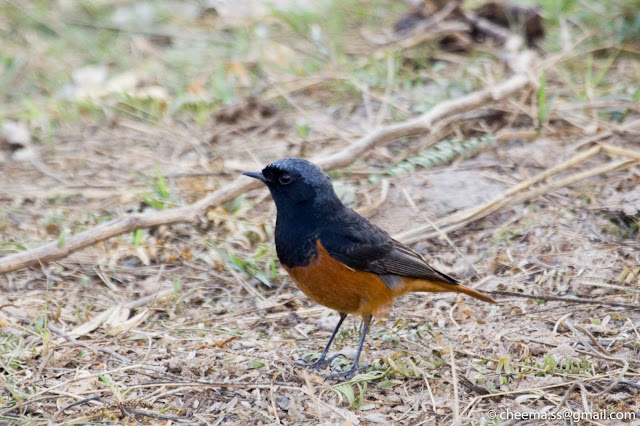
As expected the stay in nashik for whatever time - was likely to be a busy one. All the same I am lucky enough that there are enough birds in my yard to keep me busy and occupied. This sunday was a great one with goo sightings. Though the birds did try their best to test my paitence - but then I could shoot a couple of them to my satisfaction.
Showing posts with label Birds. Show all posts
Thursday, 15 December 2016
Birds in my Yard... Nashik
As expected the stay in nashik for whatever time - was likely to be a busy one. All the same I am lucky enough that there are enough birds in my yard to keep me busy and occupied. This sunday was a great one with goo sightings. Though the birds did try their best to test my paitence - but then I could shoot a couple of them to my satisfaction.
Wednesday, 2 December 2015
Dusky Crag-martin...
It is so bloody painful to enter into the realm of Swallows, Martins and Swifts. I do get amazed when someone can just look at this variety of birds and say - 'Oh - that's so and so...'
My handicap other than these remains in Raptors and Warblers. It would be some day when I gain some confidence recognising any of these varieties confidently. All the same there had to be a time I jump and start learning. The decision to jump into this came about a week back when I saw two small birds (looking like martins) sallying repeatedly infront of my window in the hotel where I was staying in Hyderabad. So I decided to click some pictures and then get down to identifying them.
Like all other things - like the saying goes - there is a lot to transverse between cup and the lip. The first problem that cropped up was that I could not open the window of my room, when I called the hotel housekeeping - they said the hotel had a policy to keep the windows closed. It took me two days just convince the hotel manager to agree open the windows as the camera refused to focus through the glass.
Thereafter next few days whenever I got time and was infront of the window - the birds were absent. Finally when I did get them back - I realised that to focus on such small birds flying was a test of my and my camera's ability. I would say the camera was always upto it - it was me who was fighting. The Canon 7D mark ii with 100-400L mark ii lens the kit was fully capable of giving me the best I could expect.
Another problem that I did not foresee was that I was on third floor and the bird spent more time at or below my eye level. At that levels the clutter of buildings and the trees around made the camera refuse focus on the birds. Whenever the birds were above the eye-level - the sky was too bright for these dark colored birds. The respite came today finally with clouded skies. This is the best I could hope for - at 1/5000 shutter speed I had to crank up the iso so please do not mind the poor shots.
Now let us see why this 'is' Dusky Crag-martin. Firstly - Swallows and martins are different from the Swifts -wherein they (Swifts) have nervous flight patterns and thinner wing. The Swallows and martins have grafeful flight, broader wings and prefer high exposed perches.
Crag-martins are larger than sand-martins. The only Grey-sand martin which could have overlapped the range here has a whitish (silver-grey) throat and breast. So that bird is also discounted. Another bird that would have confused me here was the Eurasian Crag-martin but that is paler and has bigger spots on the tail than all other crag-martins.
Dusky Crag-martin are 13 cm birds that are all-dark brown with streaked pinkish buff throat and breast. The strongest identification is that it is uniformly dusky brown with inconspicuous blackish streaks on rufous throat and breast. It also has small white spots in nearly square tail when fanned. All this may not be evident on the highly cropped and brightened photographs above but it was true on all these counts.
Sunday, 29 November 2015
White-bellied Drongo...
At 24 cm this bird is 6 to 7 cm smaller than
the Black Drongo that is extremely common in the entire sub-continent,
this White-bellied Drongo inhabits the entire central and south India
(South of Himalayas, East of Haryana and Gujarat upto West Bengal and
South upto Sri Lanka). It has a grey throat and atleast a white vent.
The juv of Black, Ashy and Crow-billed drongos may have considerable white on the abdomen but these are scalier on them and not solid white as in the white-bellied.
Though I had seen this bird off and on, I used to be always confused as I had never seen this much white belly on any bird. It is today after seeing this bird and cross referring it with 'Ripley Guide' that I am listing this as my lifer.
The bird was spotted in Nehru Zoological park, Hyderabad on 29 Nov 2015
The juv of Black, Ashy and Crow-billed drongos may have considerable white on the abdomen but these are scalier on them and not solid white as in the white-bellied.
Though I had seen this bird off and on, I used to be always confused as I had never seen this much white belly on any bird. It is today after seeing this bird and cross referring it with 'Ripley Guide' that I am listing this as my lifer.
![]() |
| White-bellied Drongo |
The bird was spotted in Nehru Zoological park, Hyderabad on 29 Nov 2015
Tuesday, 24 November 2015
Birding in Australia: White-fronted Chat
A beautiful bird of honeyeater family found in the Southern Australia and Tasmania. The male has a white face surrounded by a white band on the breast and head. There are no subspecies recognised in this family. They are 11-13 cm and weigh around 13 gm.
![]() |
| Male White-fronted Chat |
This is an endemic species of Australia and though it is Least Concern as far as the species is concerned - it is listed as vulnerable in New South Wales and Threatened in Adelaide-Mount Lofty region where it is much rarer.
The fun fact about this species is that though they are Honeyeaters, the White-fronted chats do not feed on nectar. Instead they run along the ground feeding on insects. They however have the same brush-tipped tongues as the other honey-eating members as honeyeaters.
Tuesday, 8 September 2015
Birding in Jagdalpur, Chhattisgarh: Aug - Sep 2015
Let’s kill the details of Jagdalpur first - well its a city in Bastar district of Indian state of Chhattisgarh. Jagdalpur is governed by Jagdalpur Municipal Corporation and is the administrative headquarters of Bastar District and Bastar Division. It was also the capital of the erstwhile princely state of Bastar. It has the fastest growing population of Chhattisgarh and in 2014 had a population of 2,39,525. Being a small town with three lakes and fair amount of open spaces, when I came to know that I have to spend some time there I was excited about the birds that I will get to see there.
The first thing that I did was to log on to my eBird account and try to explore whether any birding hotspot was logged by anyone in past at that location. I was disappointed. It was as if I was the first one to do birding there with no birds logged in Jagdalpur and adjoining areas. All the same I was not deterred and decided that I will make the lists and upload them.
Finally when I started to start birding, I don’t know whether I was happy or disappointed. There were no lifers that added to my list of birds, but then with patience and some luck I was able to spot a fair varieties of birds with the lists spanning half a dozen birding sessions. (The lists as submitted to eBird are at the end of the blog post). The lists are not all of the birding that I have done at this place.
As I reached the city and moved towards my hotel (only one worth calling a hotel, pure veg and liquor free) I noticed that the city was generally dirty (no offense but 'Swach Bharat' called by Mr Modi has a long long way to go) and the house sparrows were really plentiful. Infact the birds that I saw here that day were the House sparrows, Asian Pied Startling and crows. Dirty or no I had to do what I had decided to do - Birding !!.
There are two places that I did birding primarily in Jagdalpur, the airport and the Dalpat Sagar. The entry to Airport is restrictive so I cannot speak for anyone else trying to do birding here. Dalpat Sagar is one of the three lakes in the city. There were more lakes but are now dry. Infact at Dalpat Sagar also show signs of coming under pressure from two of the four sides by the expanding city.
| Google Snapshot of the Jagdalpur town. |
One of the most interesting birding spot that I have found anywhere in India so far has been the airports. They are restricted and there are pockets around it that are not touched and are full of bird life - especially the small ones. Unfortunately the larger birds are not tolerated in and around the airports and I will not dwell as to how they are treated, but will restrict to birding. The other great thing about this airfield of Jagdalpur was that there is very little fixed wing traffic, if at all. The rotary wing traffic does not mean requirement to eradicate birds, even though there have been bird hits, but fortunately they have not been serious.
So during the periods of no flying days or less flying times I took the opportunity and carried out birding within the premises. At the entry near the dispersal there is a clump of bottle brush trees and have all sorts of interesting birds coming there. One of the first ones that I saw there were the leaf birds, later identified as Jordan’s leaf bird and small minivets. Ofcourse there are a ton of Red-vented bulbuls, Oriental magpies (Nesting in the bottle brush tree), doves (Laughing dove, Eurasian collared and spotted doves) and Scaly-breasted Munia. Black drongo were also very common.
On around the runway Zitting Cisticola was common along with Prinias, Asian pied starlings and one siting of three Little Ringed Plovers. That was probably due to the recent rains and water logging at one end of runway. There were also siting of a pair of Indian Nightjar on the western edge of the runway.
| Google Snapshot of the airfield |
Other than this Baya weavers were a plenty along with a couple of pairs of Asian Koel and Spotted Owlets. Every evening there used to be Asian Openbills and Night Herons flying overhead going either North or towards South. I really did not understand what could be so important that the same bird (aka Asian Openbill) one used to go one way to roost and the other one go opposite to it. That mystery did not really get solved till end.
Next was the birding along and around the Dalpat Sagar Lake. The lake has a periphery of almost 3 km and it had one clump of trees in the middle (as also seen on google snapshot posted below) so we did expect good birding there. We were not disappointed. as we went to the lake park on the eastern edge we sawa a huge colony of Black-crowned Night Herons, Little Egrets and Little Cormorants. The trees were huge and thick and that made the exact count very difficult but could be in a few hundreds. Here at the entrance we also saw a lot of Bronze-winged Jacanas and Common Moorhen.
| Dalpat Sagar with the trees in the center visible |
From there we started a walk on the northern side with the bund. There were open fields on the northern side and baring a few vehicles it was fairly peaceful. It is then we heard Baya weavers and every few trees we passed we could see activity males getting nesting material and not stopping for us in any case. Here a bird did a short hop flight and tried to blend in the reeds. Though it was not a Lifer but always a pleasure to see that sulking Yellow Bittern. A few steps forward Black Bittern (reported as rarity) by eBird hopped, flew a few meters and disappeared in reed. I would have loved a snap but it refused to oblige. Also here I chanced to look up and saw a few trees in the middle of the lake with a lots of movement. Peering through the camera made my heart skip a beat, there they were - hundreds of Asian Openbills. This took my score to two great breeding colonies of Asian Openbills. The first one that has been recorded in Danapur (http://cheemablog.blogspot.in/2015/01/birding-in-patna-and-around-jan-15.html) I have blogged earlier about it where almost 10% of the breeding Asian Openbill congregate to breed there. The amount of birds recorded there are almost anywhere from 8000 to 12000. So seeing here does not make it as big but an important breeding ground non-though-less. We spent time there to observe this beautiful sight and then moved on after about an hour or so. Another observation I had there was that the birds were breaking top branches of nearby Eucalyptus. These trees are introduced trees in India but that did not prevent them being used for nesting material by the Openbills. The next birds that I saw and loved them were the Streaked Weavers. I got some good shots of the females waiting nearby to inspect the nests being constructed by the males. It was already two and a half hours that we had been walking and birding so decided to call it a day and headed back. The list of birds are at the end of this blog entry. There are some birds that were observed and not included in the list submitted during these few days. The notable birds are Indian Golden Oriole, Common Kingfisher, three Bitterns namely Black Bittern, Cinnamon Bittern and Yellow Bittern
Well at the end of all this birding I missed seeing Common Hill Myna. Well I guess there will be some other time when I see them.
![]() |
| Jerdon's Leaf bird in the Bottle brush tree at the airport. |
![]() |
| Black-crowned Night Heron one one of the tall trees (hence the odd angle of shot) on the Dalpat Lake entrance. Picture is highly cropped. |
![]() |
| Ashy Prinia were virtually omnipresent at the lake area and males calling out from the perches here, there and everywhere. |
![]() |
| This Brahminy Starling gave us a shot just as it would have perhaps sat and posed in a studio. |
![]() |
| One of the trees Asian Openbill breeding colony was found. The other tree is out of the frame and on to the left. Counted 100+ birds. |
![]() |
| Baya weavers were busy constructing nests and wooing females to come and inspect them. This male went a step ahead and was ready to make and offering for home coming - oh what a sight it was. |
![]() |
| Highly cropped record shot of Ashy Woodswallow. |
![]() |
| Set of two shots showing Asian Openbill using Eucalyptus as nesting material. |
![]() |
| It was fun watching Openbills coming one at a time and breaking the top twigs of a 100 feet Eucalyptus tree and flying away for nesting. |
![]() |
| Streaked Weaver female at the lake. The males once again were busy weaving and females waiting nearby for inspecting the same. |
![]() |
| Pheasant-tailed Jacana. On day one we spotted two pairs but the following day we found more than half a dozen pairs. |
![]() |
| Grey-headed Swamphen (Earlier known as Purple Swamphen, Change of name in Aug 2015) |
![]() |
| Indian Silverbill |
![]() |
| Cinnamon Bittern. One of the three Bitterns seen at the lake. Three Cinnamon Bitterns, this picture is courtesy Capt Yella Rao. I was not carrying my camera. |
I have pasted my eBird list that I have uploaded over time regarding Jagdalpur sitings. There are a few birds missing due to software issue with eBird. I am getting that resolved.
Row #,Species,Count,Location,S/P,Date,LocID,SubID
1,Lesser Whistling-Duck,2,IN-Chhattisgarh-Jagdalpur-494001 - 19.0929x82.0201,IN-CT,05 Sep 2015,L3887130,S24892768
2,Cotton Pygmy-Goose (Cotton Teal),,None,IN-CT,08 May 2015,L3623243,S23312832
3,Asian Openbill,,None,IN-CT,08 May 2015,L3623243,S23312832
4,Little Cormorant,,None,IN-CT,08 May 2015,L3623243,S23312832
5,Yellow Bittern,1,IN-Chhattisgarh-Jagdalpur-494001 - 19.0929x82.0201,IN-CT,05 Sep 2015,L3887130,S24892768
6,Black Bittern,1,IN-Chhattisgarh-Jagdalpur-494001 - 19.0929x82.0201,IN-CT,05 Sep 2015,L3887130,S24892768
7,Purple Heron,1,IN-Chhattisgarh-Jagdalpur-494001 - 19.0929x82.0201,IN-CT,05 Sep 2015,L3887130,S24892768
8,Little Egret,2,IN-Chhattisgarh-Jagdalpur-494001 - 19.0929x82.0201,IN-CT,05 Sep 2015,L3887130,S24892768
9,Eastern/Western Cattle Egret,3,Jagdalpur,IN-CT,17 Mar 2015,L3498004,S23642819
10,Indian Pond-Heron,1,Jagdalpur,IN-CT,17 Mar 2015,L3498004,S23642819
11,Black-crowned Night-Heron,3,IN-Chhattisgarh-Jagdalpur-494001 - 19.0929x82.0201,IN-CT,05 Sep 2015,L3887130,S24892768
12,Black-shouldered Kite (Black-winged Kite),,None,IN-CT,08 May 2015,L3623243,S23312832
13,Black Kite,,None,IN-CT,08 May 2015,L3623243,S23312832
14,Grey-headed Swamphen (Purple Swamphen),1,IN-Chhattisgarh-Jagdalpur-494001 - 19.0929x82.0201,IN-CT,05 Sep 2015,L3887130,S24892768
15,Eurasian Moorhen,3,IN-Chhattisgarh-Jagdalpur-494001 - 19.0929x82.0201,IN-CT,05 Sep 2015,L3887130,S24892768
16,Red-wattled Lapwing,,None,IN-CT,08 May 2015,L3623243,S23312832
17,Pheasant-tailed Jacana,1,IN-Chhattisgarh-Jagdalpur-494001 - 19.0929x82.0201,IN-CT,05 Sep 2015,L3887130,S24892768
18,Bronze-winged Jacana,,None,IN-CT,08 May 2015,L3623243,S23312832
19,Rock Pigeon (Blue Rock Pigeon),1,Jagdalpur,IN-CT,17 Mar 2015,L3498004,S23642819
20,Eurasian Collared-Dove,,None,IN-CT,08 May 2015,L3623243,S23312832
21,Spotted Dove,,IN-Chhattisgarh-Jagdalpur-494001 - 19.0777x82.0436,IN-CT,28 Aug 2015,L3873255,S24784191
22,Laughing Dove (Little Brown Dove),,None,IN-CT,31 Mar 2015,L3529196,S22797382
23,Asian Koel,,IN-Chhattisgarh-Jagdalpur-494001 - 19.0777x82.0436,IN-CT,28 Aug 2015,L3873255,S24784191
24,Greater Coucal,,None,IN-CT,31 Mar 2015,L3529196,S22797382
25,Indian Nightjar,1,IN-Chhattisgarh-Jagdalpur-494001 - 19.0929x82.0201,IN-CT,05 Sep 2015,L3887130,S24892768
26,Common Kingfisher (Small Blue Kingfisher),1,IN-Chhattisgarh-Jagdalpur-494001 - 19.0929x82.0201,IN-CT,05 Sep 2015,L3887130,S24892768
27,White-throated Kingfisher,1,IN-Chhattisgarh-Jagdalpur-494001 - 19.0929x82.0201,IN-CT,05 Sep 2015,L3887130,S24892768
28,Green Bee-eater,1,Jagdalpur,IN-CT,17 Mar 2015,L3498004,S23642819
29,Indian Roller,,None,IN-CT,08 May 2015,L3623243,S23312832
30,Coppersmith Barbet,1,Jagdalpur,IN-CT,17 Mar 2015,L3498004,S23642819
31,Ashy Woodswallow,6,IN-Chhattisgarh-Jagdalpur-494001 - 19.0929x82.0201,IN-CT,05 Sep 2015,L3887130,S24892768
32,Common Iora,2,IN-Chhattisgarh-Jagdalpur-494001 - 19.0929x82.0201,IN-CT,05 Sep 2015,L3887130,S24892768
33,Long-tailed Shrike,1,IN-Chhattisgarh-Jagdalpur-494001 - 19.0929x82.0201,IN-CT,05 Sep 2015,L3887130,S24892768
34,Black Drongo,6,Jagdalpur,IN-CT,17 Mar 2015,L3498004,S23642819
35,House Crow,,None,IN-CT,08 May 2015,L3623243,S23312832
36,Red-vented Bulbul,,None,IN-CT,31 Mar 2015,L3529196,S22797382
37,Zitting Cisticola,,IN-Chhattisgarh-Jagdalpur-494001 - 19.0777x82.0436,IN-CT,28 Aug 2015,L3873255,S24784191
38,Common Tailorbird,,IN-Chhattisgarh-Jagdalpur-494001 - 19.0777x82.0436,IN-CT,28 Aug 2015,L3873255,S24784191
39,Ashy Prinia,1,IN-Chhattisgarh-Jagdalpur-494001 - 19.0929x82.0201,IN-CT,05 Sep 2015,L3887130,S24892768
40,Plain Prinia,,IN-Chhattisgarh-Jagdalpur-494001 - 19.0777x82.0436,IN-CT,28 Aug 2015,L3873255,S24784191
41,Yellow-eyed Babbler,1,Jagdalpur,IN-CT,17 Mar 2015,L3498004,S23642819
42,Jungle Babbler,,None,IN-CT,08 May 2015,L3623243,S23312832
43,Oriental Magpie-Robin,,None,IN-CT,31 Mar 2015,L3529196,S22797382
44,Rosy Starling,3,Jagdalpur,IN-CT,18 Mar 2015,L3498004,S22797405
45,Asian Pied Starling (Pied Myna),1,Jagdalpur,IN-CT,17 Mar 2015,L3498004,S23642819
46,Brahminy Starling,1,IN-Chhattisgarh-Jagdalpur-494001 - 19.0929x82.0201,IN-CT,05 Sep 2015,L3887130,S24892768
47,Common Myna,,None,IN-CT,08 May 2015,L3623243,S23312832
48,Purple Sunbird,,None,IN-CT,31 Mar 2015,L3529196,S22797382
49,White-browed Wagtail (Large Pied Wagtail),1,None,IN-CT,08 May 2015,L3623243,S23312832
50,Paddyfield Pipit,,IN-Chhattisgarh-Jagdalpur-494001 - 19.0777x82.0436,IN-CT,28 Aug 2015,L3873255,S24784191
51,House Sparrow,1,Jagdalpur,IN-CT,17 Mar 2015,L3498004,S23642819
52,Streaked Weaver,10,IN-Chhattisgarh-Jagdalpur-494001 - 19.0929x82.0201,IN-CT,05 Sep 2015,L3887130,S24892768
53,Baya Weaver,,IN-Chhattisgarh-Jagdalpur-494001 - 19.0777x82.0436,IN-CT,28 Aug 2015,L3873255,S24784191
54,Indian Silverbill (White-throated Munia),2,IN-Chhattisgarh-Jagdalpur-494001 - 19.0929x82.0201,IN-CT,05 Sep 2015,L3887130,S24892768
55,Scaly-breasted Munia (Spotted Munia),,IN-Chhattisgarh-Jagdalpur-494001 - 19.0777x82.0436,IN-CT,28 Aug 2015,L3873255,S24784191
![]() |
| Clamorous Reed Warbler. Another last moment addition as the bird was not identified till after I had posted the blog. Photo Courtesy Capt Yella Rao |
Saturday, 25 July 2015
Get a life: Start with Bird Watching....
I have been birding for a fairly long time and I have come across these repeated questions. As I sit doing nothing today I thought why not try and reply for a larger audience. The questions to start with are simple but with no straightforward replies. So let me deal with them as I deem fit.
What is bird watching ? Oh - that’s a simple one. Well for me atleast. It is the art or let’s call it a hobby of observing birds. I would like to mention here that One can go a little further and say that perhaps Birdwatching is observing birds for recreational or social activity. I would try and kill some trivia here only. The first recorded use of term ‘Birdwatcher’ was in 1891 and bird as a verb was introduced in 1918. Birdwatching can be done with naked eye but definitely enhanced by use of Binoculars, Spotter-scopes, Cameras and listening devices. Must remember that a large component of birdwatching is Auditory. Secondly, do not mistake birding with Ornithology, it is study of birds using formal scientific methods.
Why Bird watching ? There comes a tough question. Let me elaborate. Those who love it - will swear by it, and those who don’t will scoff it off. Though it is basically a personal choice I will still try to hammer some reasons. Hmmm… let me put it this way. Birdwatching is a hobby and it has a tendency to grow on you. There are benefits on the physical side. This may turn out to be the inspiration to get off the couch and walk around more. (If I was appearing for some exams then I would have definitely included things like it would lead to more movement in the sun and more vitamin D for the body but I will desist from that… ) The physical side also benefits from trekking, walking and being in the natural environment. It does a ton to your emotional health also. Bird songs are a know remedy for anxiety. You do get a peace of mind spending time with nature especially so in today’s hectic and crazy world. Though I was a bird lover for a long long time - but still so the peace and emotional stability that I derive out of birdwatching is something that everyone deserves to experience. Then there are definite advantages for children taking on to this as a hobby. In these times of over exposure to gadgets, it would do good to kids to keep some time for quite reflection. This calmness of nature gives time to the kids to introspect and commune with nature. The children do benefit from attention to detail and focus their senses observing nature. I cannot but point out that in my years of Birdwatching I find that I use multiple senses all at the same time. Sound, touch, smell and sight. It also coaxes the children to research and experiment. At the end of it - believe me if you have a song in your heart - you will sing it seeing the natures creations...
How do I get started ? Well I do love easy answers. Whether you are in a city or village. Birds are Omnipresent. All the beautiful pictures that you see and wonder - where the hell in the world are these birds - well most of them are all around you. It is just that you had chosen to ignore them all this time. These are some of the birds that I have clicked in an around cities (Pictures are at the end of the post). Did you by any chance notice them ? If the answer is no then its time to take off some time from whatever you thought was very important in your life and appreciate nature around you. In my opinion most of us Indians categorise the birds in one of the three of four categories. Crow, Sparrow, Pigeon. The vocabulary ends somewhere there.
So to start - just look around you, your balcony, the small terrace or kitchen garden, the playground. I assure you that by the end of a day you would have spotted more kind of birds that you can count on the fingers of your hand. Next note the colour, features of colour pattern, walking, flying and the sounds that it is making. Hell - you have already become a birdwatcher.
Next what you would require is a field guide, ebook or an app to identify the birds. All are in plenty and not too much of expenditure. I will name a few - Birds of Indian Subcontinent by Tim Inskipp available in print and as an app, Birds of Northern India again by Tim Inskipp, Birds of India (Collins Field Guide) available in print and as kindle ebook, .(I find my apple app so bloody useful). Then of course are the score of data available on the net as wiki, Facebook, and tons of other resources.
Do I require Binoculars or Camera ? Well as you start observing birds from close quarters you will find that the colours and the characteristics will start driving you nuts. What happens is that most of the birds by nature are extremely shy (especially the non-city dwellers) and extremely fidgety - hopping from one branch to another. Secondly there are some birds that will just not let humans approach them - rightly so perhaps. We have been hunting and prosecuting birds for a long long time. In these cases granting them their space and observing them through binoculars or capturing them through camera is extremely helpful. You will come to appreciate them as you observe them minutely. So the answer is YES you would eventually require a pair of binoculars or camera in this sequence. In my case I did the opposite - first buying the camera and then moving around with binoculars or both.
How do I choose my binoculars ? Well well well - there are binoculars available and you don’t have to move your butt to buy one. open Amazon or snap deal or flipkart and type in binoculars and there the list goes on and on. I will try to ease the pain of choosing binoculars here. Actually if I think of it I can have another blog entry dedicated to choosing the binoculars but I will try to compress the information and present it as short as possible.
Firstly decide upon how mush you want to spend, basically there is one variety of binoculars on the lower end upto say ₹ 10,000/- or so. Do not set them off just because they are cheap, you do get good glass in this range also. Next is upto about ₹ 30,000/-, they are the mid range one. I presently have one in this and they will see you through fairly serious birding too. Next on the higher spectrum they go anywhere upto ₹ 1,50,000/- don’t ask me I have never reached that level of spending money.
Secondly, after you have chosen the category you should decide whether you want one with a Porro prism or Roof prism. Well these are the only two varieties available. Roof prism is the later technology wise and they are identified with straight cylinders. These are more compact have less internal parts and more dust and water proof. Roof prism binoculars suffer slightly from aligned prisms so do not compromise on money as only topnotch end of mid range binoculars can compete with Porro Prism binoculars. Pro binoculars on the other hand are identified with eyepiece and objective lens offset from each other. The advantages are they are cheaper, have slightly better stereoscopic lens. The disadvantages are less compact, more moving parts and difficult to make them dust proof etc.
After this move on to magnification. All binoculars have figures written like 8X42 or 10X42 etc. (to seem like a pro when you talk about binoculars you speak like… ‘I have Nikon 8 42 glass’) The first figure is the magnification. So in other words if it is 8 then the image you will see is magnified 8 times, if it 10 then the image you see is magnified 10 times. Second part refers to indicates the diameter objective lens. Okay now how do I use these numbers to choose binoculars. Well firstly the magnification. Specifically for birding the more magnification may not be necessarily better. As the magnification increases the field of view reduces and you will find it difficult to readily point the binoculars to that particular bird and focus. Also higher magnification will require more and more steady hands and in extreme magnifications tripod etc. Second number - the bigger the better. 42 is good 50 is better. what it means that more light is being passed so the image you will see is brighter and low light capability is better seeing the colours etc in birds is better. Generally I have seen birders preferring binoculars 8X42 or 10X42. Brands, the best are Nikon, Bushnell, Olympus and such. I will leave the preference to you and your research. (The picture of both Prism and roof prism binoculars are at the end of the post)
What about a camera and Lens ? Again a question that has a long long answer with no right or wrong. generally speaking a DSLR with 250mm or 300mm lens is good for beginning. As you grow the DSLR will grow and so will the lens. To begin with basic combination will cost you 35,000/- or so then going on to 2 lac plus camera and 12 lac plus lens. the range is too bloody large so take time to grow rather than jumping at the top end of the range.
Are there Indians really doing serious birding ? Well the answer will surprise you. But let me start with some statistics. The world has about 10,000 varieties of birds. India has recorded 1,400 bird species or so. North America has 914 types of birds, Australia has 898 varieties. Can you see it - the beauty of Avi fauna in India is bountiful. It is almost 14 percent of the birds found in the entire bloody world. You really have to experience it to see it for yourself. The second reason is that next generation may not see the birds we see today. It has been documented for example that Australia will have 10% birds extinct by 2100. We have not done any such research here in India - we may be worse of than this. Man is jut not doing enough for the environment we are sustaining on. Finally Brits are the nation leading in birdwatching. we are not on the top but we are surely catching on. I have argued it so many times that a nation has to first feed itself and live in security and only then Arts and Passions develop. See for example the states in India that are poor or affected by internal strife of any kind are not on any map as far as birding goes. These are states like Chattisgarh, Bihar, Orrisa... On the other spectrum are states and cities that are stable and economically better. Bangalore, Hyderabad, Mumbai, Delhi, Kolkata, Chandigarh are on top of the lists. but if you have a stable job, and staying comfortably then it is time to pick up a hobby and this is one of the very practical and engrossing at the same time.
What do we achieve by Birding ? Ah - the same question that was posed by one very learned gentlemen to me. We achieve a whole lot. The problem at present with our country is lack of awareness, because of that there is a lack of consensus for protecting birds, animals and our environment. By including every one birder we have someone who cares for our environment and plight of those little beings that are at our mercy to look after. I will tell you a story. I was visiting vineyards of nasik, the now famous Sula vineyards. There I noticed that a packet was kept in bright colour. When enquired - after much coaxing I found the answer, that was poison kept to kill birds - after all they eat OUR grapes - no ? here is the answer - a population of 1.2 billion, million logged visiting Sula wines in Nasik and one birder to ask, question and complain about poisoning birds. Till the time our community and awareness grows - we are just ants or dogs going about our daily life achieving nothing more than living, eating and reproducing. I was assured by that gentleman that this answer satisfies him and he was sorry to raise it at all. I mean not to be arrogant but then - tell me if not you, me and us then WHO ? And in any case we need a million birder to have a handful who will question the wrong.
Are there any Etiquette of Birding ? Yes there are and very rigorously followed by hard core birders. Fortunately they are fairly simple to follow. No nest photographs, No eggs or juvenile photography of birds in nest. The reason is simple but not understood. I will list the etiquettes or put it differently - Birding Ethics.
1. Support protection of Bird habitats. (The very reason I am trying to coax you to become a birder)
2. Avoid stressing birds or exposing them to danger. Please be patient and exercise restraint. Do not shoo them away to get a good picture or observation.
3. Avoid chasing or flushing birds especially during breeding or nesting season.
4. Limit use of recordings to attract birds. Especially endangered or threatened species.
5. Keep well back from nest and nesting colonies, roosts and display areas. Remember the nesting is dependant on feelings of safety by the birds. The birds tend to leave the nesting sight even with juveniles if they are stressed. Every bird has a approach radius - it will allow you to reach that but no further. It is easy to see this radius - the bird will stop what it is doing and become alert. It will stop feeding/grooming/preening. If there is a flock the sentries will give bird calls that are generally high pitched and spell out danger. Any closer and you will loose you opportunity to observe that bird.
6. Try not to use artificial light, torches, flash for photography. Stay on road and tracks. There are so many birds that roost and nest on ground - we have unknowingly destroyed by trampling over them and not even realised that.
7. Keep your pets home. Do not let stray dogs follow you for birding. They are one of the reasons that wildlife suffers. They destroy a lot of wild life. Shoo them away if they tend to follow.
You said Don’t stress the birds. How do I know I am stressing the birds ? Well There are birds that travel thousands of km migrating in search of food, avoiding bad weather and breeding. Often they are also birding dreams… so we tend to chase them not knowing that they require a lot of time feeding and resting to come back to their own selves. The first day a migratory bird arrives we want to be the first one to see and photograph. Sure - do that but then respect the bird who has flown for thousands of miles. To know that a bird is stressed is easy to see.
1. Birds will try to attract your attention by flying in front of you.
2. They will try to lure you away.
3. Bird carrying food perched in one place for a long time. (It is avoiding giving away its nest location)
4. Birds carrying nesting material but not going anywhere.
5. Birds giving alarm calls.
I have started birding and going tomorrow with a few birders for the first time. Anything I should know ? Ethics remain the same but there are some things that one can keep in mind.
1. Respect other peoples interests and rights. Share your knowledge with others.
2. Minimise unnecessary talk and noise. Do not make sudden moves. Let all participants have equal right to observe and photograph the birds. If you are the front one taking pictures and birds seem stressed do not move any further. Give opportunity to others to reach atleast as close you have to let everyone observe birds.
3. Follow the leader’s pace to observe birds. Locals have generally better knowledge to guide you during birding.
4. Do not wear bright clothes. Keep colours to muted. (This has others who do not agree but as of now consensus remains to be clothed in dull colours)
5. If birding in cars/vehicle. Do not get down till the veh is completely stopped. If you are driving always look in rear view, give indicator and park completely before letting anyone out.
6. You can and should make a list of local birds that you are likely to see there. It eases recognition and keeps you alert.
I have clicked a picture of a beautiful bird. I do not recognise it. What should I do ? Well there are so many experts waiting to help you out. For that you will have to post your picture in one of the online forums, Facebook in Indian Birds Group, there are tons of other localised groups like Chandigarh bird club, Hyderabad birds, Bangalore birds etc. Then there are sites like Indian Nature Watch. Post the photograph and await a response. Well there are a few points to note here also. You post the picture In comments leave
Request ID ?
Name of place picture was clicked
Date picture was clicked.
This helps narrow down the seasonal variations of feathering and colours and also local birds available in that particular area.
How do I keep a tag of all the birds I have seen ? Well a lot of people keep tagged photographs, keep records in pen or on excel sheets. By my experience eBird is the best place that a log can be kept. There are apps you can use in Android and iOS or website. Record keeping becomes important over a period of time so do take time and jot down what all birds you have seen, where and when.
Okay I will conclude this writeup here. It has taken better part of three days and it is time that it goes online now. If you like it do leave a comment. If there would be something else you would like to know do leave a comment I will surely reply.
HAPPY BIRDING !!
![]() |
| The Porro-prism binoculars on the left and Roof-prism Binoculars on the right. |
![]() |
| Large-grey Babbler - Not as common as the Jungle babbler but not uncommon nonetheless... Brown and not so good to look at - but give it a good look - it will impress you... |
![]() |
| Yellow-eyed babbler. A babbler that is small and rushes purposefully from one bush to another. They move in groups as expected from a babbler. Look at the eyes - the earmark of this babbler... |
![]() |
| Didn't ever notice this bird - our own very symbol of intelligence, the Spotted Owlet. Beauty in simplicity... |
![]() |
| Asian-pied Starling. Oh yes it is colorful too - see it once and appreciate the bird. You will like it. Common in and around the cities and villages. |
![]() |
| Oh this - ?? The Indian Silverbill. Yes it is around you - just search for it. It is generally found in its own group of with other munia like Red-avadavat or scaly-breasted munia. |
Sunday, 22 March 2015
Chandigarh Bird race: Feb 2015
The bird race in Chandigarh for the year has been conducted on 15 Feb 2015. I missed it two last years so was eagerly looking forward to the race. Like a ‘Fauji’ I tried to prepare: maps - check, vehicle prepare - check, Camera - check, snacks, Route - check and misc - check… What I did not count on was the fever and bad throat I will have on the day of the bird race.
Fever or no - man has to do what he has to do … so gulped in half a dozen antibiotics and was out of the house @5:30 to pick up my team members and go. The team was named ‘Painted Stroks’ and member included myself, Mrs Alpana, Mrs Saroj Gulhati.
The basic stats for the day included, 12hrs 30min spent on road hunting birds. covered 250 km (approx) and bagged 107 species of birds. Oh ! let me not forget to mention that the winning team bagged 180+ birds. In all 200 species of birds were sighted that day. This can make the mouth wide open and turn green with envy the most avid birders I am sure. What a day it was, there were three lifers for me that I clicked that day. As the tradition goes - the beer will be served to all those who care to join me whenever and wherever...
The oldest birder that day was 'young' lady of 73+ (Mrs Inder Grewal) and the youngster of eight (Master Chirag Sharma, son of Capt Sharma). The event was organised by Mrs Rima Dhillon and Sh Navjit Singh of Avian Habitat and wetland society,Chandigarh. HSBC was the official sponsor of the group. The winning team was "Kingfisher" the team members had an unfair advantage of having group members who can tell with the eyes closed where, which tree and which branch to find a particular bird at any time of the day ;-). All the same Heartiest congratulations is in order to Mr Rajive Das (Team leader) and Mr Siddharth, Prof MS Sekhon, Mr Mahesh Garg and Mr Praveen Malhotra.
Ok I will describe the day in a little bit more of detail. Chandigarh as often say - that it is a little birding heaven in India. Being virtually at the foothills of the Himalayas has the best of both the plains, the hills and a good migration stopover. It also happens to be almost the western most point of the birds that do the East/West migration in India. That being said February is one of the best times for birding. Though like any other place - there were some birds missing but then one cannot have it all - can we ? Well I say that it is one of the best one as winter migrants are here. Also because of snow in upper himalayas - a lot of birds are down in the foothills (like Red fronted Serins and Jays etc), The foliage that was dense earlier starts thinning down and the sunshine is bright.
Of the hotspots that are around Chandigarh I covered the following
1. Chakki Modh
2. Chappar Chirri
3. Mote Majra
4. Chhatbir Zoo area (wild birds only of course)
That being so - what did I miss ? A lot actually. Infact I had included Sukna lake in my initial route that I had planned but dropped it at the last moment as I was running late and expected the Mote Majra to cover up most of the birds that I would have missed.
1. Sukna lake
2. PGI and University area
3. Traffic park
4. YPS park
5. Baddi road
6. Morni
It was almost impossible to include these areas as I was slow by all means but am sure that I would have bagged a couple of dozen or more birds had I speeded up to cover some more area.
All in all - an Adrenalin Rush by chasing so many beauties and gourmet snacks served by the team members made it one of the most memorable Birding days of my life...
![]() |
| Red-vented Bulbul |
![]() |
| House Sparrow |
![]() |
| Red-billed Leiothrix |
![]() |
| Grey Bushchat |
![]() |
| Grey-headed Woodpecker |
![]() |
| Grey Bushchat (Female) |
![]() |
| Chestnut -bellied Rock Thrush (Female) |
![]() |
| Rosefinch (Female) P.S: leave comment if this is wrongly identified. |
![]() |
| Streaked Laughingthrush |
![]() |
| Griffon Vulture |
![]() |
| Golden bush robin |
![]() |
| Golden Bush Robin |
![]() |
| Plumbous Water Redstart |
![]() |
| White-crested Laughingthrush |
![]() |
| Steppe Eagle and House Crows |
![]() |
| Cattle egret |
![]() |
| Wood Sandpiper P.S: leave a comment if the ID is wrong |
![]() |
| Black-winged stilt |
![]() |
| Painted Stork and Purple Swamphen |
![]() |
| Northern Shoveler |
![]() |
| Knob-billed Duck |
![]() |
| Peacocks |
![]() |
| Pied Avocets |
![]() |
| Spotted owlet |
Well before I wrap up the blog there was this small little bit thing - our team bagged the bird of the day.
Subscribe to:
Posts (Atom)