Friday, 26 December 2014

Visit to MORNI / TIKKAR TAAL 22 Dec 14

Mondays trip to morni - Rima Dhillon, Self, Jasbir Randhawa,

7am to 5pm (phew... a marathon birding session)

Report by Mrs Rima Dhillon.

7 am on Monday saw us headed out to morni in cold and fog. However soon after we passed berwala the mist cleared away and we were greeted by troops of monkeys and watery sunshine-better than none at all.

Between three stops for tea and sandwiches, cookies and my ever popular mathis we were able to sight 63 species though we could only hear the Great barbet and the Grey francolin.

The shutterbugs got some great pictures including those of the Asian barred owlets which were sighted thrice at different locations. Himalayan bulbul, red-vented bulbuls and grey-breasted prinia (in non breeding plumage) were seen in abundance, the sky was quite bereft of any raptors-just a few griffons searching for thermals in the far distance.

This trip we decided to give a miss to the Badi Sher area and instead go all the way to Tikkar Taal. It was a good decision as we came upon a pair of Black storks in the lake. Braving the aggressive bull in the field near the lake we tried to get closer to the storks for better fotos but alas jasbir was quickly tagged by them and they took flight.

The return to Chandigarh was via a different route.Just before the fork that bifurcates towards Badisher, there is another road leading down to chandimandir- it is marked by a number of teastalls under a huge banyan tree. Earlier this road was not motorable but now it is properly metalled and much shorter. It is about 14 km to the kalka-zirakpur highway and comes out 200 yards ahead of the toll plaza-the only drawback as you end up paying at the toll plaza!!

We discovered that Haryana tourism has an eco tourism setup with huts etc for staying and nice lawns at Thapla just 5km from the highway.

It was a marathon day as we got home at 5pm but well worth it. (List of Birds is after the photographs)
Rufous Sibia

White Browed Fantail

Black-throated Accentor


Asian Barred Owlet

Common GreenShank

Black Strok

Grey-hooded Warbler

Long Tailed Minivet

Russet Sparrow

White-browed Wagtail


1. Blue whistling thrush
2. Hoopoe
3. Indian silverbill
4. Oriental white-eye
5.  Common sandpiper
6. Grey wagtail
7. White wagtail
8. Laughing dove
9. Rufous treepie
10.  Himalayan bulbul
11.  Redvented bulbul
12. Black drongo
13.  Ashy drongo
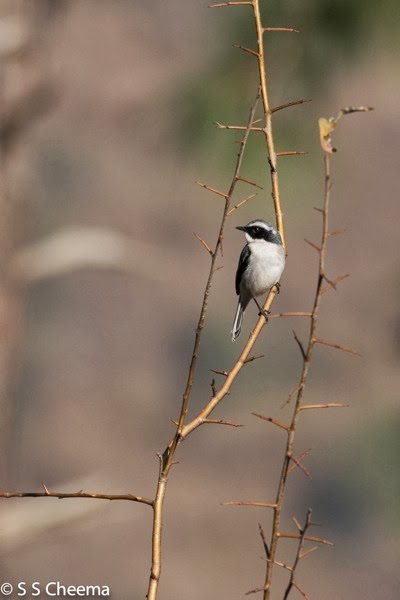
14.  Grey bushchat
15.  Jungler babbler
16. Black-chinned babbler
17. Indian roller
18. Black redstart
19. Brown rockchat
20.  Indian peafowl
21. Ashy prinia
22.  Grey-breasted prinia
23.  Himalayan griffon
24. Yellow-breasted greenfinch
25. Black-throated accentor
26. Siberian chiffchaff
27. Streaked laughingthrush
28.  Asian barred owlet
29. Large-billed crow
30. Common myna
31. Great cormorant
32. Common greenshank
33. White-browed wagtail
34. Greater coucal
35. Rose-ringed parakeet
36. Little grebe
37. Common pochard
38. White-breasted waterhen
39. Black stork
40. Little cormorant
41. Little egret
42. Blue rock pigeon
43. Lesser whitethroat
44. Humes leaf warbler
45. Long-tailed minivet
46. Grey-fronted pygmy woodpecker
47. Fulvous breasted woodpecker
48. Rock bunting
49. White-capped bunting
50. Bar-tailed treecreeper
51. Rusty-cheeked scimitar babbler
52. Crested bunting
53. Rufous sibia
54. White throated fantail
55. White-browed fantail
56. Pond heron
57. Rosy pipit
58. Verditer blue flycatcher
59. House sparrow
60. Russet sparrow
61. Grey-hooded warbler
62. Red wattled lapwing
63. Black bulbul
64. Great barbet (heard)
65. Grey francolin (heard)
66. Lark (unidentified)

Saturday, 29 November 2014

Canon 7D Mark II - a sincere review...

Let me put my this article in perspective by giving it a little bit perspective. I am a birder, a hobbyist at that but a serious one. I do not mind kicking the road whenever I can spare some time and be out photographing them. I am not a commercial photographer in the sense that I have not sold a picture - not that I have not tried. 


There were two reasons that I bought this camera. First was - I followed the rumours since last year that a new crop sensor upgrade to Canon 7D was on its way. I did buy a stop gap camera, Canon 70D and was quite sure about it that the purchase is stop gap only. Then I followed all the reviews that I could get my hands on and was convinced that this camera is for me and would be my companion for some time to come. Since I purchased one of those Tony Northrup's books - I was following him what he had to say for the camera. Well then the camera fell in my hands.


Now the question - is is worth it ?
Let me give a run up of the good part first. It is a good camera to feel in your hands, a solid one to be precise. The picture quality on the look of it is same as 70D but ramp up the ISO a bit and then there is the discernable difference. The much talked about Auto Focus is GOOD as in GOOD - it does have a wow factor - for the first time I got some pictures of flying birds those were acceptable. Not very good perhaps but then far better that I got with the previous cameras I held. The 10 FPS is again a WOW, the firing up does not create noise that I have seen in the older cameras and I did feel that the vibrations produced by shutter firing is far less. That should show in pictures and I might be able to fire up without IS perhaps.


There is no negatives per se - but then there are steps taken backwards. WiFi is one that I missed the first day, the touch screen that I came to like in 70 D is another. That I feel is what I will miss the most perhaps. Though I did like the GPS - I noticed that it remains on even with  the camera switched off - the GPS keeps blinking. There was also a noticeable additional drain in the battery. It also took more time to get a GPS lock than that I expected. I did click quite a few pictures with GPS turned on and am still exploring what more I can achieve with GPS turned on. The location by the way displays seamlessly in Lightroom I use.

Should anyone else upgrade - Well a personal choice per se, I would have and have - because I was waiting for this upgrade for more than a year (when the definite rumours had surfaced regarding 7D upgrade) and was sure that 70D is just a fill-up. 
Well that's that...

Two pictures of flying birds taken today (02 Nov 14) for all. Both pictures are cropped, No reduction of noise etc in Post processing.

Short-eared owl, Mohali, India

Black Shouldered Kite, Mohali, India


I intend to keep adding pictures for some time to come so that you can get better impressions as and when I click them.

Friday, 14 February 2014

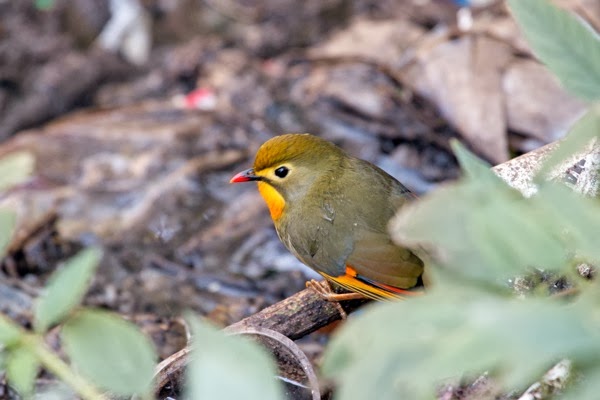
Red-Billed Leiothrix


The Red-billed Leiothrix (Leiothrix lutea) is a member of the Leiothrichidae family, and is native to the Indian Subcontinent. Adults have bright red bills and a dull yellow ring around their eyes. Their backs are dull olive green, and they have a bright yellow-orange throat with a yellow chin; females are somewhat duller than males, and juveniles have black bills. It has also been introduced in various parts of the world, with small populations of escapees having existed in Japan since the 1980s. It has become a common cagebird and amongst aviculturists it goes by various names: Pekin Robin, Pekin Nightingale, Japanese Nightingale, and Japanese (Hill) Robin, the last two being misnomers as it is not native to Japan.

The leiothrix is about six inches in length, generally olive green, and has a yellow throat with orange shading on the breast. It also has a dull yellowish ring around the eye that extends to the beak. The edges of the wing feathers are brightly colored with yellow, orange, red and black and the forked tail is olive brown and blackish at the tip. The cheeks and side of the neck are a bluish gray color. The female is a lot paler than the male and lacks the red patch on the wings. It doesn't fly frequently, except in open habitats. This bird is very active and an excellent singer but very secretive and difficult to see. 

The leiothrix is usually found in India, Bhutan, Nepal, Burma and parts of Tibet. This species is a bird of the hill forests, found in every type of jungle though it prefers pine forests with bushes. It has also been found at elevations ranging from near sea level to about 7,500 feet.The species was introduced to the Hawaiian Islands in 1918 and spread to all the forested islands except Lanai. Its population on Oahu crashed in the 1960s and it disappeared from Kauai, but is now common and increasing on Oahu. The leiothrix was released in Western Australia but it failed to become established. This species was also introduced in Great Britain but permanent establishment was unsuccessful. It was introduced to France, where it is now established in several areas.


This bird was photographed in Chakki Modh in Himachal Pradesh by S S Cheema

Wednesday, 25 December 2013

Birding in Chakki Modh 24 Dec 13.

I went for a Bird Photography walk to Chakki Modh. I was introduced to the place by Mrs Rima Dhillon and have been a fairly regular visitor there. With the winters on us a lot of birds that are otherwise in the higher reaches of Himalayas come down to the lower hills and this place gives some wonderful opportunities to see them and photograph them. 
Well the plan was simple - get up in the morning and drive down to the place (30 - 45 min drive from Chandigarh). 
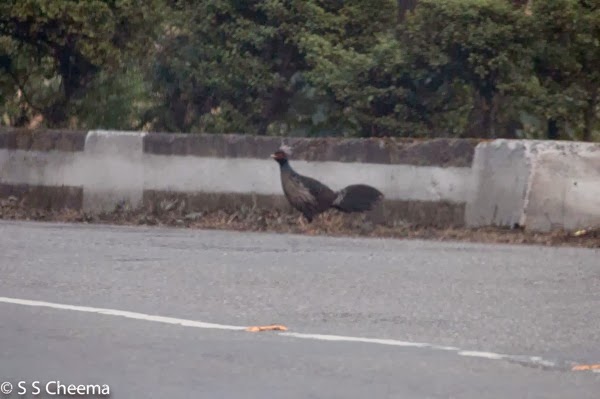
The day started well - even before I turned on to the road where we usually start birding - we saw a family of Khalij Pheasant (2 Males and one female) crossing the road. I stopped the car and struggled to take out my camera - it gave one of the lessons that I have refused to learn in the past - be prepared at all times with camera - opportunity does not follow your planning. By the time I shot a poorly composed shot out of the front the birds had already run away leaving me with tears in my eyes for the lost opportunity.
 IMG 0286
I then turned on to our birding road and were rewarded by White-Crested Laughing Thrush and Red Billed Leiothrix. The sun was still not up so the pictures were no go. All the same the on our way back we stopped again and could get some descent pictures of the Leiothrix - sadly the White-Crested Thrushes were not there.
IMG 0363 EditIMG 0370 EditIMG 0373 Edit 2IMG 0381 EditIMG 0395 Edit
IMG 0424 Edit
All in all the place just does not stop to amaze with the variety and the beauty of mother nature. For the birders it is a dream come true.
IMG 0437 Edit
IMG 0497 Edit
IMG 0485 EditIMG 0544 Edit
IMG 0547 EditIMG 0549 EditIMG 0554 EditIMG 0556 Edit
IMG 0579 EditIMG 0570 Edit
The list of birds that I saw is as given under, there are a lot of variety that I did not recognise - I have a few pictures of them as well that I will list separately.
1.   Ashy Prinia
2.   Blue Fronted Redstart
3.   Black Bulbul
4.   Black Throated Tit
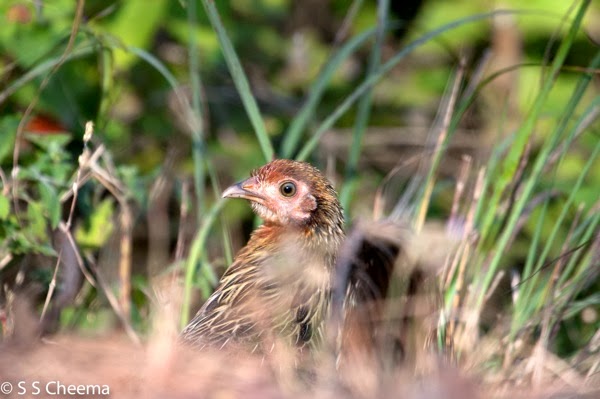
5.   Red Junglefowl
6.   Chestnut Bellied Nuthatch
7.   Common Myna
8.   Common Tailorbird
9.   Crimson Sunbird
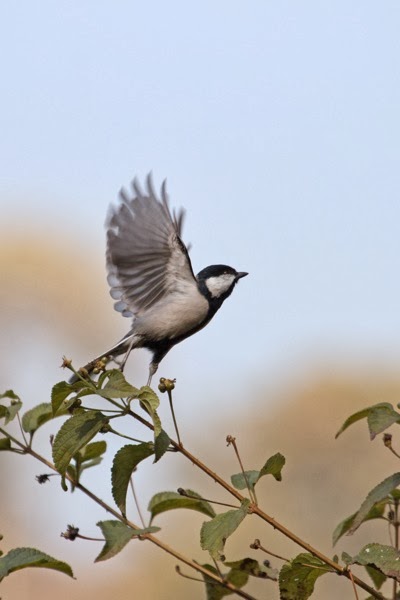
10.  Great Tit
11.  Blue Fronted Redstart
12.  Grey Treepie
13.  Himalayan Bulbul
14.  House Sparrow
15.   Indian Robin
16.   Jungle Babbler
17.   Khalij Pheasant
18.   Large Billed Crow
19.   Oriental Magpie Robin
20.   Pied Bushchat
21.   Red Billed Blue Magpie
22.   Red Billed Leiothrix
23.   Himalayan Bluetail
24.   Red Vented Bulbul
25.   Rufous Bellied Woodpecker
26.   Rufous Chinned Laughingthrush
27.   Rufous Treepie
28.   Russet Sparrow
29.   Streaked Laughingthrush
30.   White Capped Water Redstart
31.   White Crested Laughingthrush
32.   Common Hoopoe
33.   XX____XX Bunting
34.   Crested Serpent Eagle
35.   Oriental White eye
36.   Grey Headed Woodpecker
This is in no way the complete list. Since I do not write down as I see the birds - this is what I remember/recollect from the photographs. There is a fairly wide variety that I did not recollect the names and the Stalwarts were not there to prompt me/tell me. The book was taking just too long to refer to.
...I also have to remember to take more tea and snacks with me next time.

Friday, 4 November 2011

Purple Swamp Hen....


Purple Swamphen
 Long time back I had gone to Chatbir Zoo in near Chandigarh and saw these birds that looked and behaved like Coots but were purple in colour. Now - almost 20-25 years later I saw the same birds in one of the village ponds and clicked a few snaps. Then I started browsing the feild guide I have of Indian birds to see what they were. They are the Purple Swamp Hens... A fairly straightforward name and digging a bit more gave me an information that their conservation status is not of a major concern.


My point is straight forward. If that be so - how come a crazy person who stares more at birds than females missed spotting these birds for so long. What I am doing now is not only posting the photographs but also the position off the Google maps with Lat and long that whosoever is interested can build up upon it and can use this as data if so desired.


Peacock...

A thing of Beauty - whichever way you see this bird. It may be number one in elegance. I had a lot of them in our near vicinity for majority of the places I have been posted to. Every single time I have seen them I wanted a camera to shoot - shoot and shoot. Luckily on this day I had one (Canon 550D with my 55-250 lens) and shot this bird to the hearts content. Only regret that I still carry is that this bird was in Captivity and not the one in the wild. Anyway now I am better prepared with a good set of lens, a bi-pod and ofcourse my camera. Will surely look around for some good shots and post them here.

Thursday, 3 November 2011

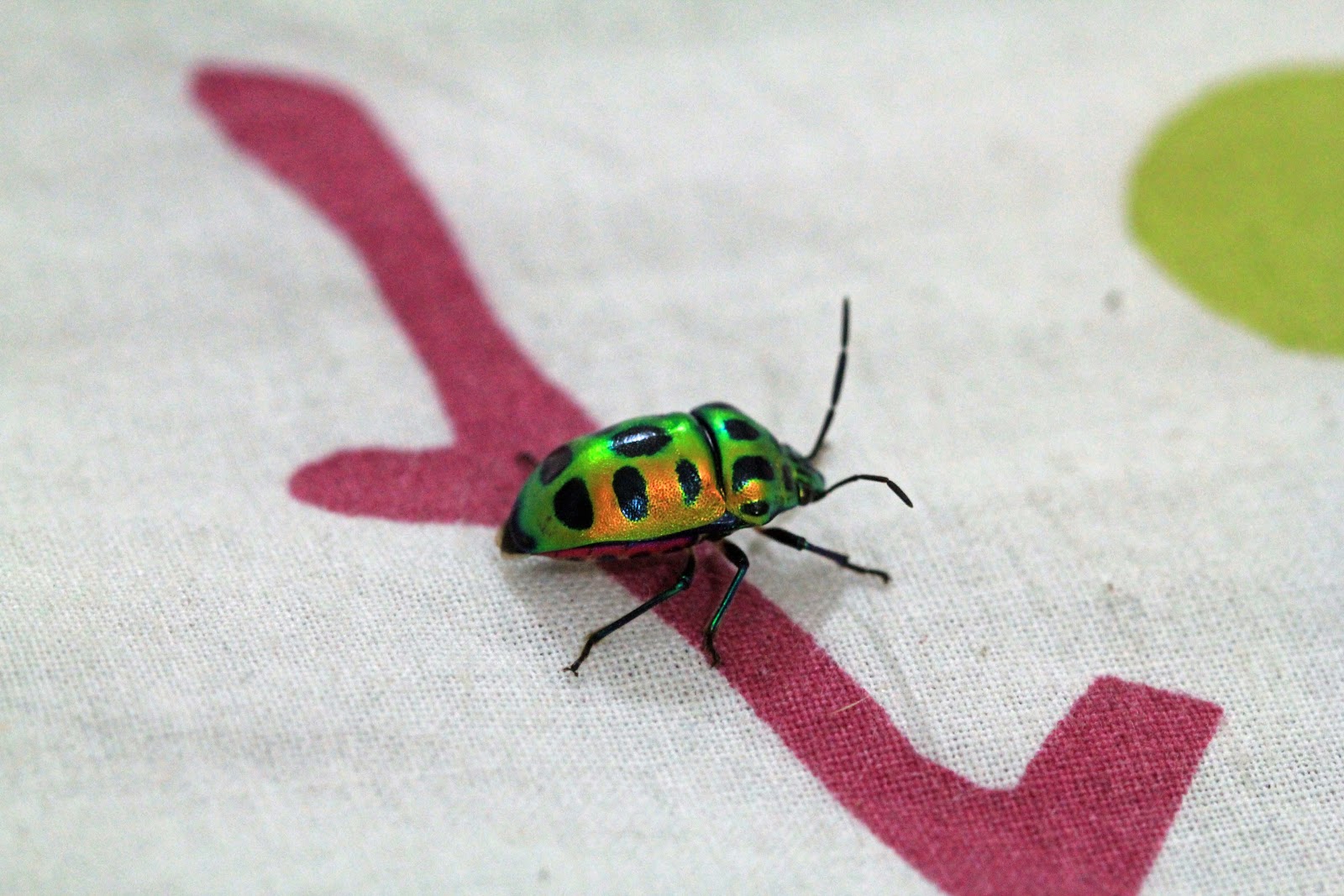
Colours of nature... Beetle


 I had bought a new Canon 100mm macro and was hunting around for little things to hunt down with my camera. It so happened that I just could not capture anything worthwhile as the butterflies, flowers, Dragonflies and anything interesting were just to busy doing their job for waiting and posing for me. it was the will and a beautiful spider shot that motivated me to continue hunting for more photographs.

After spending better part of month with nothing much to show in Macro Photography and perhaps I was also finding it difficult to justify the purchase to my Finance Minister (read wife) I saw this beautiful bug crawl up my bed one day - like a savior sent by the Heavens above. I clicked away and what I saw myself after I finished was God's wonderful creation - not seen or appreciated by so many. So here I am posting a few Photographs.

After I had finished - I started to read around how I could have made these photographs better. The problem that I saw in these photographs was very shallow Depth Of Field (DOF) that takes a lot of detail from the Beetle. Then I started searching around for a solution and surprisingly came across one that I will be trying in my next photograph and also explaining it in detail - that is if I get it right myself. Till that time please do have a look at these photographs and do leave a comment/leave a advise how I can do it better. All suggestions are welcome. The photographs are available in original full format and will be happy to share to whomsoever asks. Looking forward to Photo Critics.